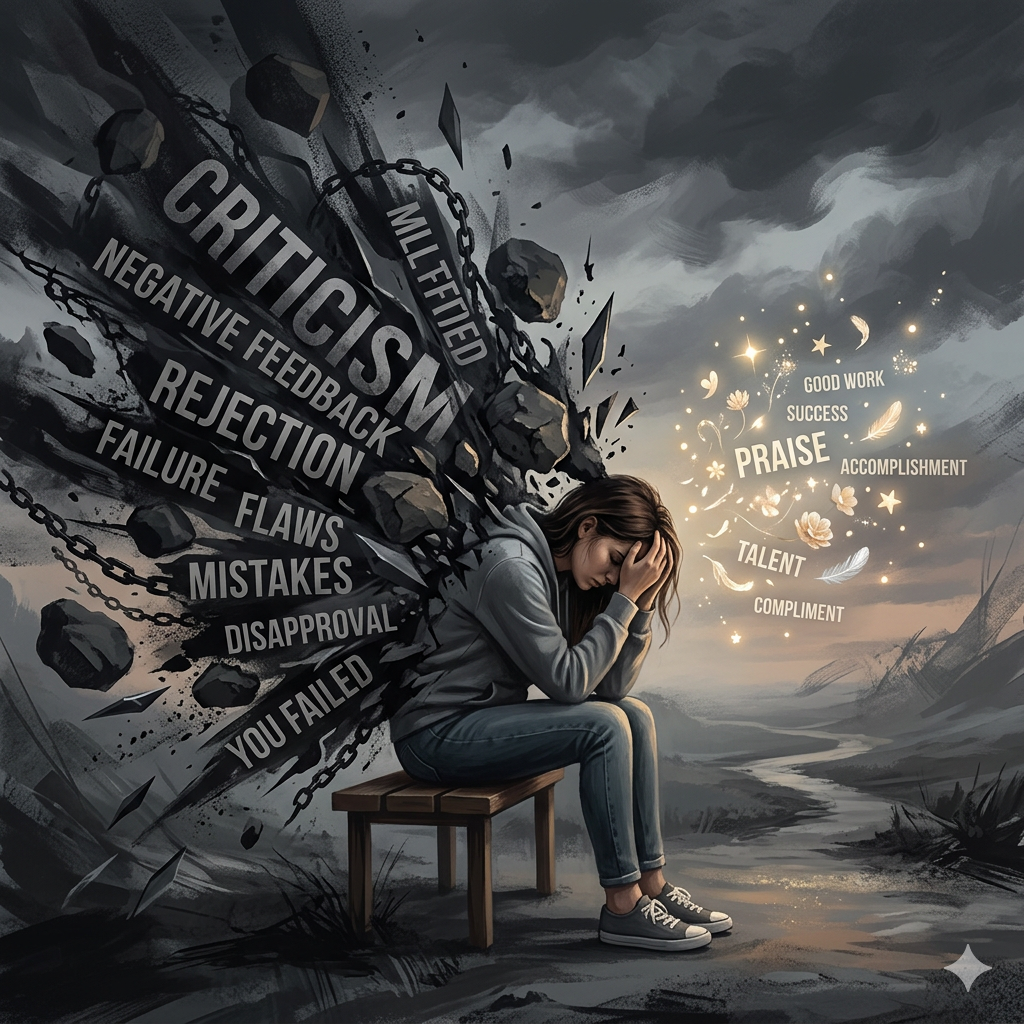
In workplaces, schools, and everyday relationships, feedback plays an essential role in growth and improvement. People receive praise when they perform well and criticism when mistakes occur. Ideally, both types of feedback should help individuals understand their performance and make better decisions in the future. However, a common psychological pattern appears across many situations: negative feedback often feels stronger and more memorable than praise. Even when individuals receive several positive comments, a single critical remark may dominate their thoughts. Understanding why this happens reveals important insights about human cognition, emotions, and decision-making.
One of the most important explanations for this phenomenon is negativity bias, a well-established principle in psychology. Negativity bias refers to the tendency for negative experiences, emotions, and information to have a stronger psychological impact than positive ones. The human brain tends to pay more attention to criticism, errors, and threats than to compliments or positive signals. This bias developed because, throughout human evolution, recognizing and responding to potential dangers was essential for survival.
In early environments, ignoring a threat could have serious consequences, while overlooking a positive signal was usually less risky. As a result, the brain evolved to prioritize negative information in order to protect individuals from harm. Although modern life rarely involves physical survival threats, this biological mechanism still influences how people process feedback.
Another factor that intensifies the impact of negative feedback is emotional intensity. Criticism often triggers stronger emotional reactions than praise. When individuals receive negative feedback, they may experience embarrassment, disappointment, frustration, or anxiety. These emotional responses activate areas of the brain associated with threat detection and stress, which makes the experience more vivid and memorable.
Praise, on the other hand, often produces positive emotions such as satisfaction or pride, but these emotions are usually less intense and shorter in duration. Because emotional intensity strengthens memory formation, negative experiences tend to remain more prominent in memory.
The brain’s threat detection system also contributes to this effect. Structures such as the amygdala are responsible for identifying potential threats and preparing the body to respond. When individuals receive criticism, especially in social or professional environments, the brain may interpret the situation as a threat to reputation, status, or belonging. This perception activates heightened attention and emotional processing.
Social dynamics make this response even stronger. Humans are highly social beings who depend on cooperation, approval, and group membership. Negative feedback can sometimes be interpreted as a signal that one’s performance or behavior may threaten social acceptance. Because maintaining social relationships has historically been essential for survival, criticism can trigger strong psychological reactions.
Another reason negative feedback feels stronger is the role of self-evaluation and personal expectations. Many individuals maintain internal standards about how well they should perform in different areas of life. When feedback suggests that performance falls below these expectations, it creates a gap between perceived ability and actual results. This discrepancy often motivates individuals to analyze the criticism carefully in order to understand what went wrong.
This reflective process can reinforce the memory of negative feedback. People may replay critical comments repeatedly in their minds, attempting to interpret their meaning or identify ways to improve. The more often an experience is mentally revisited, the more deeply it becomes embedded in memory.
By contrast, praise usually confirms existing expectations rather than challenging them. When individuals receive positive feedback, it may simply reinforce what they already believed about their performance. Because there is less discrepancy to resolve, the brain may not engage in the same level of reflection.
The frequency of feedback also plays a role. In many professional environments, praise may be less frequent or less detailed than criticism. Managers, teachers, or supervisors often focus more on identifying problems than acknowledging successes. As a result, negative feedback may appear more prominent simply because it receives greater attention.
Communication style can further amplify the impact of criticism. Negative feedback is sometimes delivered in a direct or emotionally charged manner, which increases its psychological effect. Praise, in contrast, may be expressed briefly or casually, reducing its perceived significance.
Cognitive biases can also influence how individuals interpret feedback. People may interpret ambiguous comments as more negative than intended, particularly when they are already concerned about their performance. This interpretation bias can strengthen the emotional impact of criticism.
Despite its emotional intensity, negative feedback is not inherently harmful. In fact, constructive criticism plays an essential role in learning and improvement. By highlighting errors or weaknesses, negative feedback provides valuable information that helps individuals refine their skills and strategies.
The challenge lies in how feedback is delivered and interpreted. When criticism is vague, overly harsh, or focused on personal attributes rather than behaviors, it can damage motivation and confidence. However, when negative feedback is specific, constructive, and balanced, it becomes a powerful tool for growth.
Balancing negative feedback with recognition of positive achievements is also important. Research suggests that individuals perform best when they receive a mixture of constructive criticism and genuine praise. Positive feedback reinforces effective behaviors, while constructive criticism identifies opportunities for improvement.
Organizations often adopt structured feedback systems to achieve this balance. Performance reviews, mentoring programs, and coaching sessions can help ensure that employees receive clear guidance while also recognizing their contributions.
Individuals can also manage their reactions to feedback more effectively. One approach involves separating the emotional response from the informational value of criticism. Instead of focusing on how criticism feels, individuals can focus on what it reveals about performance and how it can support improvement.
Practicing reflective thinking can also help transform criticism into learning opportunities. By analyzing feedback objectively and identifying actionable insights, individuals can convert emotional discomfort into constructive progress.
Ultimately, the reason negative feedback feels stronger than praise lies in the brain’s evolutionary design, emotional processing systems, and social dynamics. These mechanisms encourage individuals to pay close attention to potential problems in order to adapt and improve.
While this tendency can sometimes amplify the emotional impact of criticism, it also provides an important learning advantage. By understanding why negative feedback feels so powerful, individuals and organizations can manage feedback more effectively—ensuring that both praise and criticism contribute to growth, development, and better decision-making.