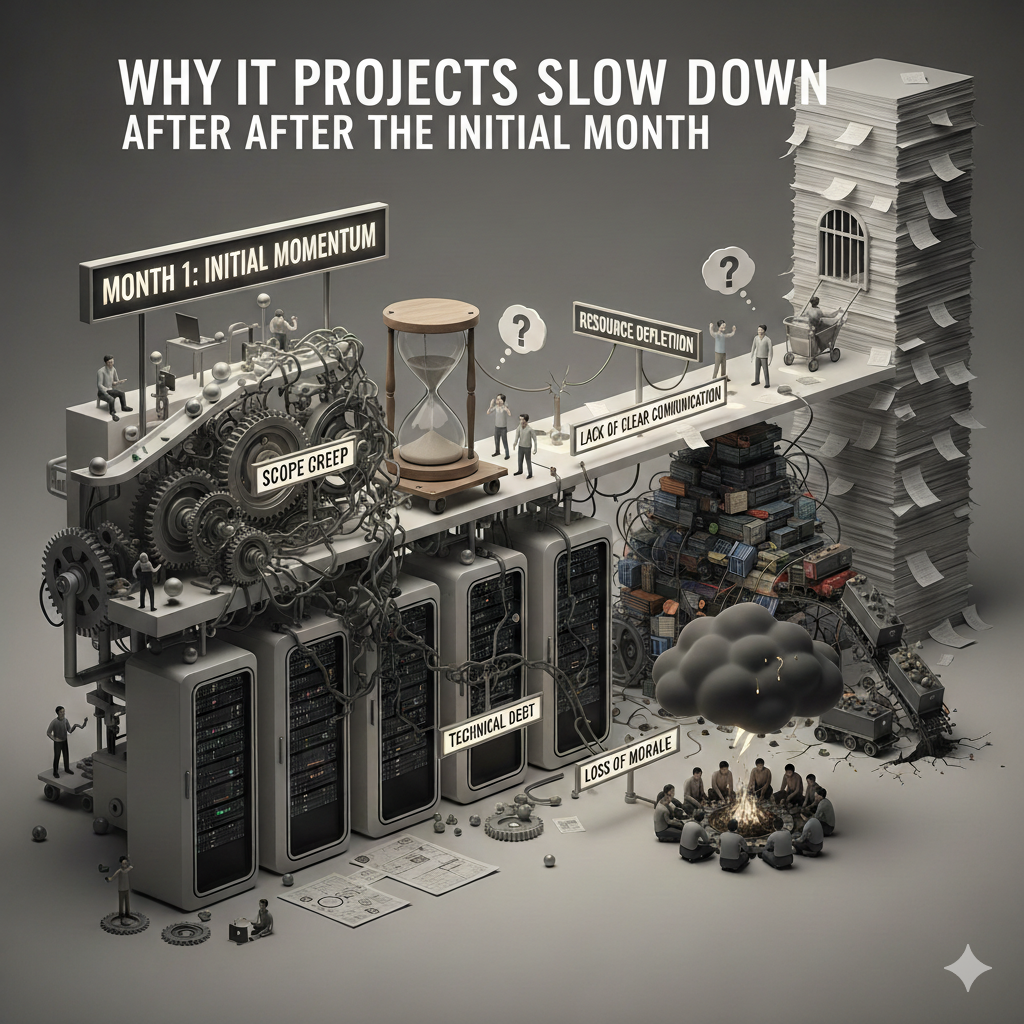
Many IT projects begin with energy, optimism, and executive attention. Kick-off meetings are well attended. Budgets are approved. Timelines are outlined. Stakeholders express enthusiasm about transformation, efficiency, or innovation within the enterprise digital strategy. Yet within weeks, that early momentum begins to fade. Meetings become less focused. Deliverables slow. Priorities shift. What initially felt urgent becomes just another ongoing initiative inside the enterprise project management framework. This pattern is common across organizations of all sizes. IT projects often stall not because of technical impossibility, but because of structural, cultural, and leadership misalignment within the broader business technology ecosystem. The first month reveals intent. The months that follow reveal governance discipline. Understanding why momentum fades is essential to preventing stalled initiatives, wasted investment, and strategic drift within the enterprise technology landscape.
Initial Excitement Masks Structural Weaknesses
The early phase of IT projects typically focuses on vision rather than execution. Leadership articulates objectives such as modernization, automation, integration, or scalability within the enterprise transformation roadmap. However, detailed alignment across systems, workflows, and risk considerations inside the enterprise architecture framework may remain underdeveloped. When the project transitions from planning to execution, gaps emerge. Dependencies surface. Resource constraints become visible. Assumptions made during kick-off meetings are tested against operational realities inside the enterprise IT operations model. Momentum slows because enthusiasm cannot compensate for missing structural clarity.
Unclear Ownership Dilutes Accountability
Strong project momentum depends on clearly defined ownership within the enterprise governance model. In many cases, IT projects are initiated by executives but lack a single accountable leader empowered to make decisions across departments. When responsibilities overlap between business units and IT teams inside the enterprise project governance framework, delays multiply. Decisions require consensus. Approvals stall. Questions about scope remain unresolved. Without centralized accountability embedded in the enterprise strategic management structure, the urgency of the first month dissipates into procedural negotiation.
Competing Priorities Resurface
IT teams often manage multiple initiatives simultaneously within the enterprise IT management structure. During the first month of a new project, attention is temporarily concentrated. However, operational responsibilities such as system maintenance, incident response, and user support inside the enterprise infrastructure lifecycle quickly reclaim bandwidth. Business stakeholders also shift focus as quarterly targets, sales campaigns, or compliance deadlines emerge within the enterprise performance management framework. The project loses visibility among competing priorities. Momentum declines not because the project lacks importance, but because the organization lacks protected capacity for sustained execution inside the enterprise resource allocation strategy.
Scope Expansion Creates Friction
After initial planning, stakeholders frequently request additional features, integrations, or adjustments within the enterprise application environment. While these enhancements may be valuable, they expand timelines and introduce complexity across the enterprise architecture alignment process. Scope creep disrupts the balance between ambition and feasibility. Teams that anticipated manageable milestones suddenly face expanded deliverables. Documentation grows. Testing requirements multiply within the enterprise quality assurance framework. When scope is not tightly governed, progress appears slower even if effort increases. The perception of stalled momentum can reduce morale and executive confidence.
Underestimated Technical Debt Surfaces
Legacy systems often contain undocumented dependencies, outdated configurations, or fragile integrations within the enterprise technology infrastructure. During the first month, these risks may remain theoretical. As implementation progresses, hidden technical debt becomes visible inside the enterprise IT modernization strategy. Unexpected compatibility issues, data migration challenges, or performance bottlenecks delay progress. Teams divert time to remediation tasks rather than forward development within the enterprise digital transformation ecosystem. Momentum slows because the project confronts the realities of accumulated infrastructure complexity.
Communication Gaps Erode Alignment
Effective IT projects require consistent communication between executives, business units, and technical teams within the enterprise collaboration framework. During kickoff phases, meetings are structured and frequent. Over time, updates may become irregular or overly technical. When stakeholders lose visibility into milestones, risks, and achievements inside the enterprise project reporting system, enthusiasm fades. Executives may assume limited progress. Teams may assume leadership disengagement. Communication gaps weaken trust and obscure incremental successes that sustain energy.
Metrics Focus on Activity Instead of Outcomes
Projects often track tasks completed, hours logged, or tickets resolved within the enterprise performance governance model. While operational metrics are necessary, they do not always reflect strategic impact. When stakeholders cannot see tangible business value emerging from early efforts inside the enterprise business intelligence framework, they question prioritization. Momentum diminishes if the project appears disconnected from measurable outcomes. Aligning technical milestones with business performance indicators strengthens perceived progress and reinforces commitment.
Budget Constraints Reappear
Initial funding approval creates a sense of security. However, as projects advance, additional costs related to licensing, integration tools, cybersecurity controls, or infrastructure upgrades may arise within the enterprise financial governance strategy. If budgets were tightly scoped during planning, unexpected expenses create friction. Leaders may hesitate to authorize supplementary funding. Procurement processes slow momentum inside the enterprise resource management framework. Financial uncertainty can stall progress even when technical work is ready to proceed.
Cultural Resistance Becomes Visible
Change initiatives inevitably challenge established workflows within the enterprise operating model. During early planning, resistance may remain subtle. As implementation approaches, employees begin to recognize how automation, new platforms, or process redesign will affect daily routines inside the enterprise change management strategy. Resistance surfaces through delayed feedback, limited participation in testing, or reluctance to adopt new systems within the enterprise user adoption framework. Without proactive engagement, scepticism undermines momentum. Sustained progress requires cultural alignment, not just technical capability.
Leadership Attention Declines
Executive involvement often peaks at project launch. Once the initiative appears underway, leadership attention shifts to other priorities within the enterprise growth strategy. Reduced executive oversight can signal diminished urgency. Teams may struggle to escalate decisions or resolve cross-department conflicts inside the enterprise governance architecture. The absence of visible sponsorship weakens accountability and focus. Projects that maintain consistent leadership engagement tend to preserve momentum longer.
Overambitious Timelines Create Disillusionment
Aggressive deadlines are frequently established to demonstrate urgency within the enterprise strategic planning framework. While ambition can motivate teams, unrealistic timelines create frustration when milestones slip. When initial projections prove unattainable due to complexity inside the enterprise infrastructure ecosystem, stakeholders may perceive underperformance even if progress is substantial. Disillusionment reduces enthusiasm and support. Realistic planning grounded in technical assessment sustains morale and credibility.
Insufficient Risk Planning Amplifies Delays
Risk identification often receives limited attention during early enthusiasm phases within the enterprise risk management framework. As the project advances, unanticipated compliance requirements, cybersecurity concerns, or vendor limitations emerge inside the enterprise security governance model. Without predefined mitigation strategies, teams must pause execution to address emerging threats. Reactive problem-solving disrupts flow and weakens momentum. Structured risk governance strengthens continuity and reduces mid-project slowdowns.
Vendor Dependencies Introduce Uncertainty
Many IT projects depend on external vendors, consultants, or cloud providers operating within the enterprise cloud computing infrastructure. Initial agreements may outline deliverables, but delays in vendor response, integration challenges, or shifting priorities can interrupt progress. Internal teams often lack full control over external timelines inside the enterprise vendor management framework. When dependencies stall, project momentum suffers. Careful vendor governance and contractual clarity reduce these risks.
Preventing Momentum Loss
Sustaining energy beyond the first month requires deliberate governance discipline within the enterprise project lifecycle management strategy. Key practices include:
- Establishing clear executive sponsorship
- Defining measurable outcome-based milestones
- Protecting dedicated resources
- Maintaining structured communication cadences
- Enforcing scope control
- Integrating risk monitoring into weekly reviews
Embedding projects within the broader enterprise strategic management model ensures alignment between execution and long-term objectives. Momentum thrives when governance remains consistent after the kick-off phase.
The Strategic Cost of Stalled Projects
When IT initiatives lose momentum, the consequences extend beyond delayed timelines. Partially implemented systems create integration gaps inside the enterprise application ecosystem. Budget overruns reduce capacity for future innovation within the enterprise digital innovation framework. Stakeholder confidence declines. Employees become sceptical of transformation initiatives. The organization may hesitate to pursue future modernization efforts inside the enterprise technology lifecycle strategy. Stalled projects represent not just operational inefficiency, but strategic opportunity loss.
Conclusion
IT projects rarely lose momentum due to a lack of technical ability. More often, they falter because of governance gaps, shifting priorities, unclear ownership, cultural resistance, and insufficient executive oversight within the business technology strategy. The first month generates energy. Sustained progress requires structure. When leadership embeds accountability, protects resources, aligns metrics with outcomes, and maintains visibility inside the enterprise governance framework, projects retain focus and purpose. Momentum is not self-sustaining. It is the product of disciplined leadership and integrated planning across the evolving enterprise technology landscape. Organizations that recognize this reality transform ambitious beginnings into successful long-term outcomes.