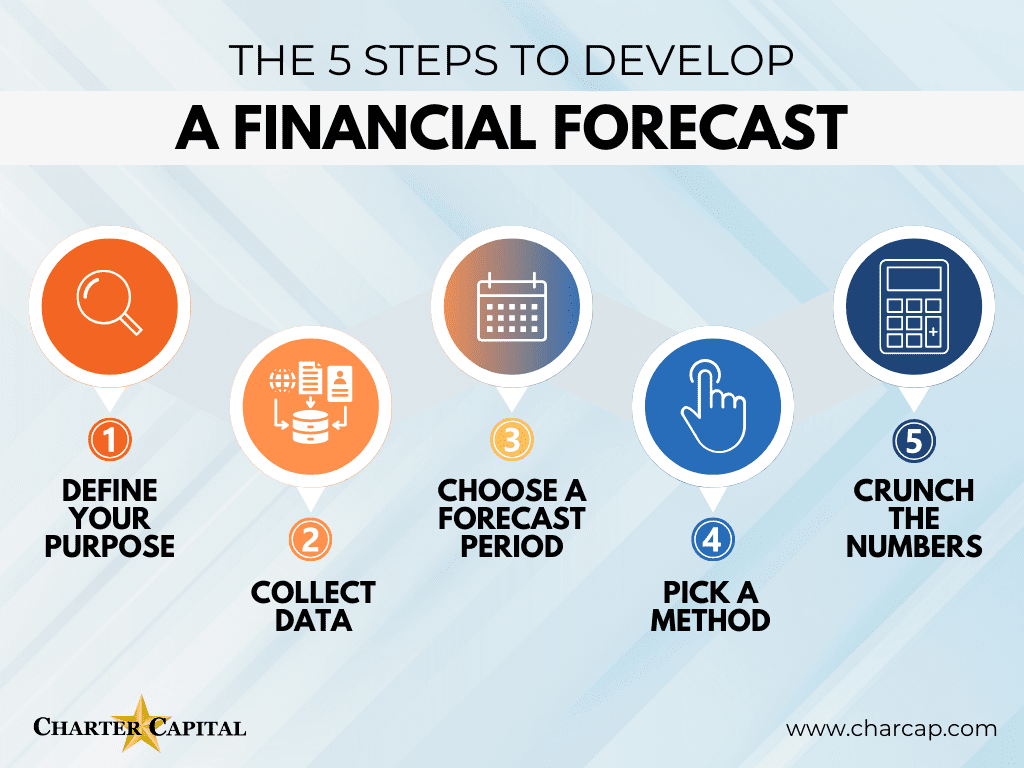
Marketing strategy is often built around creativity, audience insights, and competitive positioning. Teams analyze consumer behavior, evaluate campaign performance, and allocate budgets based on past engagement metrics. While these components are essential, one foundational discipline is frequently underutilized in marketing planning: financial forecasting. When marketing decisions operate independently from projected revenue models, cost structures, and cash flow expectations, organizations risk misalignment between growth ambition and economic capacity. This is why financial forecasting should guide marketing strategy, not follow it.
At its core, financial forecasting estimates future revenue, expenses, cash flows, and profitability under different scenarios. It translates strategic intent into measurable economic outcomes. When marketing planning begins without reference to forecasts, budgets may be allocated based on historical spend patterns or competitor activity rather than financial feasibility. In contrast, when forecasting informs strategy, marketing initiatives are evaluated according to their projected contribution to long-term profitability and liquidity stability.
One of the primary benefits of integrating financial forecasting into marketing strategy is budget discipline. Marketing departments often face pressure to scale campaigns quickly, especially when early performance appears promising. However, forecasts reveal whether projected revenue growth will offset increased acquisition costs. Without forecasting, scaling decisions rely on short-term performance metrics such as return on ad spend (ROAS) or cost per acquisition (CPA). These metrics provide operational efficiency insights but do not capture long-term financial impact.
Forecasting introduces clarity regarding contribution margin. Each marketing campaign should be assessed not only by revenue generation but by the portion of revenue remaining after variable costs. If forecasts show that increasing ad spend will reduce overall margin due to rising acquisition costs, strategic adjustments can be made before losses accumulate. Marketing initiatives should strengthen margin structure, not compress it.
Cash flow modeling is another critical reason forecasting must guide strategy. Advertising expenses typically require immediate payment, while revenue may be realized later. If customer payment cycles extend beyond marketing payment obligations, liquidity gaps can arise. A well-prepared forecast identifies these timing mismatches and helps determine sustainable spending thresholds. Growth without liquidity planning can destabilize even profitable businesses.
Forecasting also improves alignment between Customer Acquisition Cost (CAC) and Customer Lifetime Value (CLV). Marketing teams may celebrate declining CAC or increasing lead volume, but without projecting lifetime revenue streams, the true economic impact remains unclear. Financial models can estimate how long it takes to recover acquisition costs and whether retention rates support profitability targets. Strategic campaigns should prioritize high-lifetime-value segments, not just high-engagement segments.
Market volatility further strengthens the case for forecast-driven strategy. Economic shifts, competitive pricing changes, supply chain disruptions, or regulatory updates can alter cost structures rapidly. Financial forecasts incorporate scenario analysis, enabling organizations to evaluate best-case, base-case, and worst-case outcomes. Marketing strategies built with scenario awareness remain resilient under uncertainty.
Leadership decision-making becomes more disciplined when forecasting guides marketing. Rather than reacting to performance spikes or competitor campaigns, executives can assess whether incremental investment aligns with long-term financial goals. If forecasts indicate diminishing returns beyond a certain budget level, expansion can pause until efficiency improves.
Forecasting also clarifies performance expectations. Marketing initiatives should have measurable economic targets tied to projected revenue and profit contributions. When campaign outcomes deviate from forecast assumptions, corrective action becomes data-driven rather than reactive. Continuous comparison between projected and actual performance refines strategic accuracy over time.
Another key advantage lies in capital allocation. Businesses operate with limited resources. Allocating excessive funds to underperforming channels reduces investment capacity elsewhere. Forecasting identifies which marketing initiatives generate sustainable economic return and which create temporary volume without profitability. Strategic prioritization emerges from financial visibility.
Forecast-driven marketing encourages cross-functional collaboration. Finance, operations, and marketing teams must share data to build accurate models. This integration reduces siloed decision-making and ensures that marketing initiatives align with operational capacity and production planning.
Scaling decisions benefit significantly from forecasting. Early campaign success does not guarantee scalability. Forecasting models can simulate performance at higher budget levels, incorporating potential increases in acquisition cost and decreases in conversion rate. Understanding marginal return dynamics prevents overexpansion.
Pricing strategy also depends on financial modeling. Promotional campaigns may increase short-term revenue but compress margins. Forecasts evaluate whether discount-driven strategies improve overall profitability or simply shift revenue timing. Marketing should reinforce pricing discipline rather than undermine it.
Technology investments further highlight forecasting’s importance. Automation tools, analytics platforms, and advertising systems require financial commitment. Forecasting ensures that such investments generate measurable economic benefit rather than adding fixed costs without proportional return.
Risk management becomes proactive when forecasting informs strategy. Rather than discovering financial strain after scaling campaigns, businesses anticipate potential shortfalls. Contingency planning protects stability during periods of underperformance.
Brand positioning influences forecast accuracy as well. Premium brands with strong customer loyalty often achieve higher lifetime value and margin stability. Forecast models incorporating brand equity metrics produce more reliable marketing investment decisions.
Data analytics strengthens forecasting precision. Historical campaign performance, customer retention patterns, and purchase frequency trends provide inputs for predictive modeling. However, analytics without financial interpretation lacks strategic depth. Forecasting transforms data into economic insight.
Performance measurement must align with forecast objectives. Marketing dashboards should include financial indicators such as projected profit contribution, payback period, and margin sensitivity alongside operational metrics. This integrated view reinforces accountability.
Long-term sustainability requires balancing growth ambition with economic capacity. Forecasting provides that balance. It quantifies opportunity while exposing risk. Marketing strategy guided by financial projections supports controlled expansion rather than speculative growth.
In competitive markets, organizations that integrate forecasting into marketing planning gain strategic advantage. They invest where incremental return justifies cost and avoid channels with diminishing profitability. This discipline strengthens resilience during downturns and accelerates value creation during expansion.
Ultimately, marketing strategy should serve broader business objectives, not operate independently from them. Financial forecasting ensures alignment between promotional activity and economic reality. It transforms marketing from a cost center driven by visibility metrics into a strategic function grounded in measurable value creation.
Growth remains essential, but sustainable growth depends on financial intelligence. When financial forecasting guides marketing strategy, decisions become structured, scalable, and economically sound. Organizations that embrace this integration build durable foundations, ensuring that every campaign contributes not only to awareness and engagement but to long-term profitability and stability.