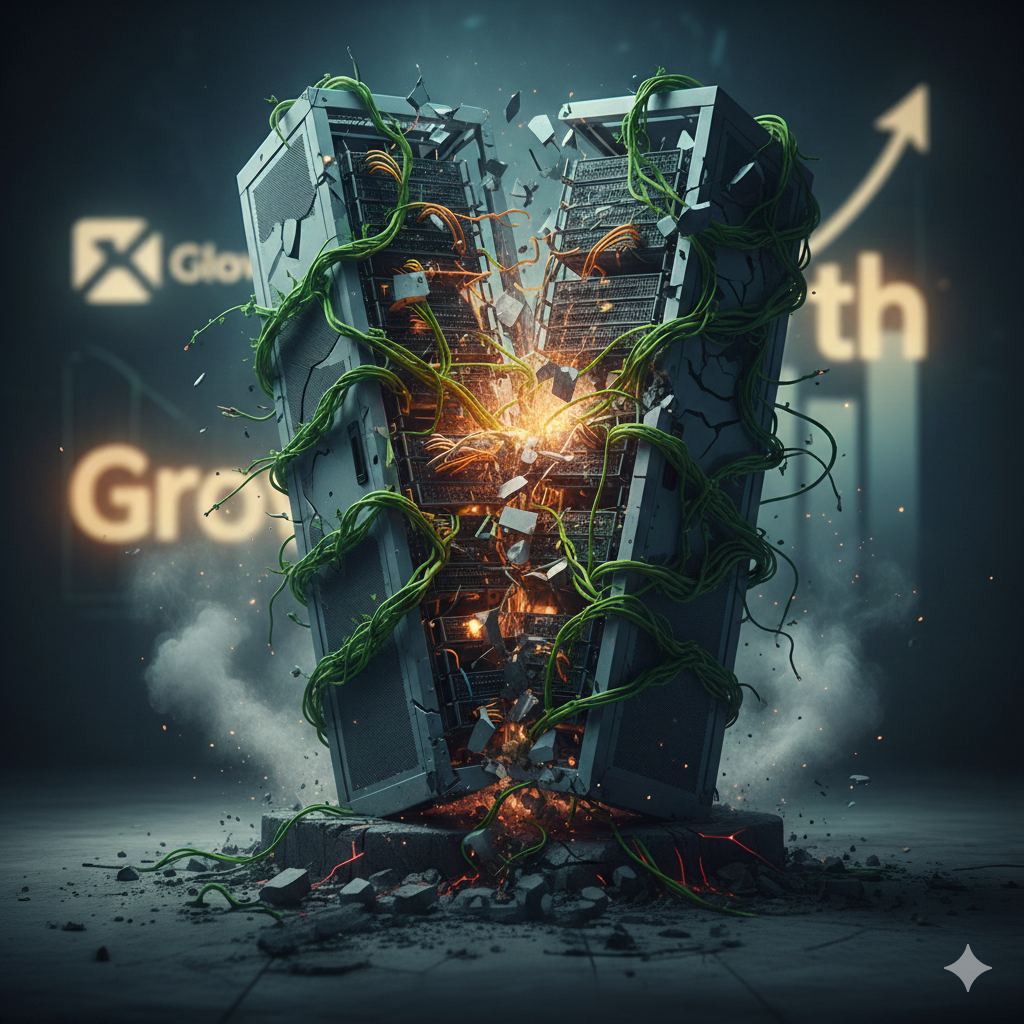
Growth is often seen as a clear indicator of success. Increasing customer demand, expanding teams, higher transaction volumes, and entry into new markets are all positive signals. However, behind this upward trajectory, many organizations face a hidden challenge that remains unnoticed until it becomes critical — their IT infrastructure was never built to support rapid scale. In the early stages, businesses prioritize speed and cost-efficiency. Systems are chosen based on immediate needs rather than long-term scalability. Manual processes are manageable, data volumes are moderate, and operational complexity is limited. But when growth accelerates, these same systems begin to strain under pressure. Instead of enabling expansion, technology becomes a bottleneck. Below are five major ways growth can silently destabilize IT infrastructure — and why proactive planning is essential for sustainable scaling.
1. System Capacity Fails Under Increased Demand.
Every IT system is designed with certain capacity limits. Whether it is server performance, database processing power, bandwidth, or cloud configuration, infrastructure is typically sized according to current business needs. When growth outpaces these assumptions, performance degradation begins. Increased traffic on websites can cause slow loading times or crashes. Transaction-heavy applications may lag. Internal collaboration tools can become unreliable. Storage systems may run out of space. What once felt stable begins to feel fragile. For example, a business that handled 500 daily transactions may suddenly need to process 5,000. Without scalable architecture such as load balancing, distributed servers, or cloud auto-scaling, systems can fail during peak demand. Customers may experience downtime, failed payments, or delayed responses. Performance issues during periods of growth are particularly damaging because expectations are high. Customers attracted by brand expansion expect reliability. If systems fail during growth surges, the reputation impact can outweigh revenue gains. Scalability is not automatic. Infrastructure must be intentionally designed to absorb increased demand. Otherwise, growth exposes weaknesses that were previously hidden.
2. Legacy Technology Becomes an Operational Bottleneck
Many growing businesses rely on legacy systems that were implemented years earlier. These platforms may still function technically, but they often lack flexibility, integration capability, and automation support. As operations expand, legacy systems create friction. They may not integrate easily with modern CRM platforms, advanced analytics tools, or cloud-based collaboration software. Data synchronization becomes inconsistent. Manual intervention increases. Employees begin using temporary workarounds exporting data into spreadsheets, duplicating records across systems, or maintaining shadow databases. These quick fixes introduce errors, version conflicts, and inefficiencies. Additionally, legacy systems often struggle with increased data volumes. Reporting may slow down significantly. Batch processing may take longer. Updates may require downtime. What once supported a small team becomes restrictive for a growing organization. Replacing legacy systems is complex and expensive, which is why many businesses delay modernization. However, postponing upgrades increases long-term risk. Eventually, growth forces an urgent transformation that disrupts operations more severely than planned modernization would have. Sustainable growth requires adaptable, integration-friendly technology that evolves with the organization.
3. Security Risks Multiply as the Digital Footprint Expands
Growth expands not only business operations but also exposure to cyber threats. As companies scale, they introduce new devices, remote employees, third-party vendors, and customer data repositories. Each addition increases the attack surface. Small organizations often operate with minimal security controls because perceived risk appears low. However, rapid expansion without proportional security enhancement creates vulnerabilities. For example, new employees may not receive structured cybersecurity training. Access privileges may not be reviewed regularly. Systems may not be patched consistently due to workload pressure. Cloud configurations may be deployed quickly without proper review. Cybercriminals frequently target growing companies because they know rapid expansion often leaves security gaps. A single breach during a growth phase can result in data loss, financial damage, and regulatory penalties. Moreover, as organizations expand into new regions or industries, compliance requirements increase. Data protection laws, industry regulations, and client security standards become stricter. Without scalable security governance, businesses may unknowingly violate compliance obligations. Security must grow in parallel with business expansion. Otherwise, growth increases risk instead of opportunity.
4. Operational Complexity Overwhelms IT Teams
Growth does not simply add volume; it adds complexity. More employees require account management and technical support. More customers generate additional service requests. More integrations create configuration challenges. More data requires structured management. However, many businesses underestimate how quickly IT workloads expand during growth. Support ticket volumes rise sharply. Infrastructure monitoring becomes more demanding. System maintenance becomes continuous rather than periodic. If IT team capacity does not scale proportionally, overload occurs. Response times slow down. Preventive maintenance is delayed. Strategic planning takes a back seat to daily firefighting. Burnout becomes a serious concern. Skilled professionals spend their time reacting to problems rather than building long-term improvements. Innovation slows because resources are focused on maintaining stability. When IT operates in reactive mode, growth becomes unstable. Small issues escalate into larger disruptions because there is no time for preventive architecture planning. Investing in IT scalability whether through internal expansion or managed services — ensures that growth strengthens operations rather than overwhelms them.
5. Manual Processes Collapse at Scale
In early stages, manual processes can work efficiently. Email-based approvals, spreadsheet tracking, and informal workflows may be manageable when transaction volumes are low. However, as growth accelerates, manual processes become risky and inefficient. For example, manually generating invoices for 50 clients per month may be reasonable. Doing the same for 500 clients introduces delays and errors. Spreadsheet-based inventory tracking may work for a small warehouse, but not for multi-location operations. Manual customer onboarding may be smooth with a small sales team, but becomes chaotic when lead volume triples. Data entry errors increase. Communication gaps widen. Operational delays multiply. Growth amplifies inefficiencies. What once required minimal coordination suddenly demands structured workflow automation. Without process standardization and automation, scaling becomes disorganized. Employees spend more time correcting mistakes than driving innovation. Operational stress increases across departments. Automation, workflow management tools, and integrated systems are essential to prevent growth from creating internal disorder.
The Strategic Importance of Scalable Infrastructure
Growth is not merely about acquiring more customers. It is about sustaining higher levels of complexity without sacrificing reliability.
Organizations that proactively design infrastructure for scale gain competitive advantages:
- Consistent customer experience during traffic surges
- Faster deployment of new products
- Reliable data for executive decision-making
- Stronger cybersecurity posture
- Improved employee productivity
In contrast, companies that ignore scalability often experience disruptive transitions. Emergency migrations, unplanned system replacements, and crisis-driven upgrades are far more expensive than proactive planning. Scalable IT infrastructure is not a luxury. It is a foundation for sustainable growth.
Conclusion
Growth is a powerful indicator of success. However, if technology infrastructure is not prepared to evolve alongside expansion, success can quickly turn into instability. System overload, legacy bottlenecks, security vulnerabilities, IT burnout, and collapsing manual processes are not isolated problems they are symptoms of infrastructure that was never designed to scale. Organizations that treat IT as a strategic growth enabler rather than a background utility position themselves for long-term resilience. True growth does not break your infrastructure. It strengthens it when planned correctly.