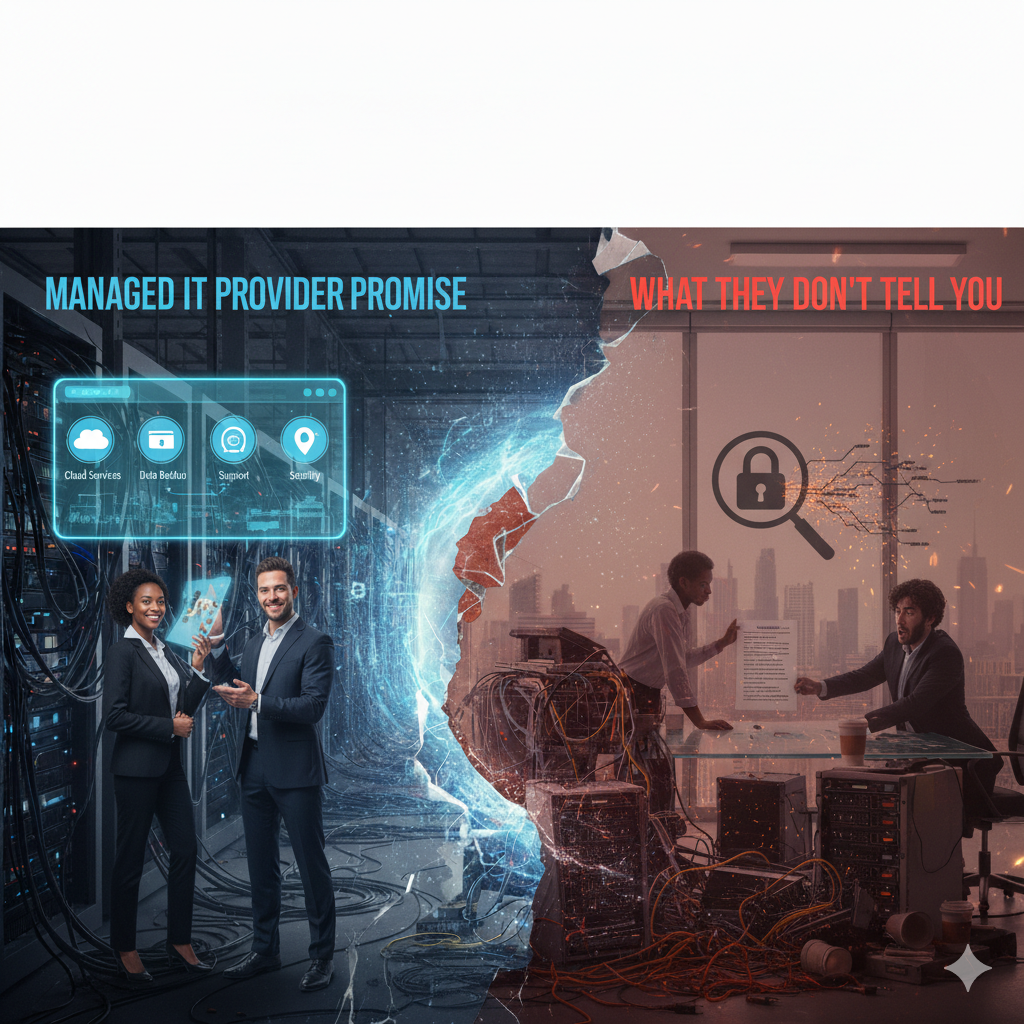
Managed IT services have become an essential part of modern business operations. Many organizations rely on Managed IT Providers (MSPs) to handle infrastructure, security, and technical support so they can focus on core business activities. While these services offer clear benefits, there are certain realities that are rarely discussed upfront.
Understanding what managed IT providers don’t always tell you can help businesses make more informed decisions and set realistic expectations.
The Promise of Managed IT Services
Managed IT providers typically promote convenience, reduced costs, and peace of mind. By outsourcing IT responsibilities, businesses expect smoother operations, fewer technical issues, and predictable expenses. While these benefits are real, they do not always reflect the full picture of how managed services operate in practice.
Not All Services Are Truly “All-Inclusive”
One of the most common misunderstandings is the assumption that managed IT services cover everything. In reality, many providers operate under defined service scopes. Tasks outside the agreed scope such as major system upgrades, advanced cybersecurity incidents, or custom integrations may result in additional charges. These limitations are often buried in contracts rather than discussed clearly.
Response Time Does Not Always Mean Resolution Time
Managed IT providers frequently advertise fast response times. However, a quick response does not guarantee a fast solution. Some issues require escalation, third-party involvement, or extended troubleshooting. This distinction between acknowledging a problem and resolving it is not always clearly explained to clients.
Security Is Shared, Not Fully Outsourced
Many businesses believe that hiring a managed IT provider completely transfers cybersecurity responsibility. In reality, security is a shared responsibility. While providers manage tools and monitoring, internal practices such as password hygiene, access control, and employee awareness still play a major role. Ignoring this shared responsibility can create serious security gaps.
Standardized Solutions May Limit Flexibility
To operate efficiently, many managed IT providers rely on standardized tools and processes. While this approach reduces costs, it may not fully align with every business’s unique needs. Customization is often limited, and businesses may need to adapt their workflows to fit the provider’s systems rather than the other way around.
Cost Savings Can Decrease Over Time
Managed IT services are often chosen for predictable monthly costs. However, as businesses grow or require additional services, expenses can increase. Extra users, enhanced security features, compliance requirements, or after-hours support can add to the original cost. These incremental expenses may not be obvious during initial discussions.
Vendor Lock-In Is a Real Risk
Some managed IT providers use proprietary tools or configurations that make switching providers difficult. Over time, businesses may find themselves dependent on a single vendor. Without proper documentation and data ownership clarity, transitioning to a new provider can become complex and costly.
Communication Gaps Can Affect Outcomes
Technical expertise alone does not guarantee effective service. Poor communication between businesses and providers can lead to misunderstandings, unmet expectations, and delays. Clear documentation, regular reviews, and transparent reporting are essential but not always emphasized by providers.
How Businesses Can Protect Their Interests
To avoid surprises, businesses should take a proactive approach when working with managed IT providers:
- Review service-level agreements carefully
- Clarify what is included and what is not
- Understand escalation and resolution processes
- Ask about data ownership and exit strategies
- Maintain internal IT awareness
An informed client-provider relationship leads to better long-term results.
Conclusion
Managed IT providers play a valuable role in supporting modern businesses, but they are not a one-size-fits-all solution. What they don’t always tell you is that successful IT management still requires awareness, involvement, and clear expectations from the business side. By understanding the hidden realities of managed IT services, organizations can make smarter decisions, avoid unnecessary risks, and build stronger partnerships with their providers.