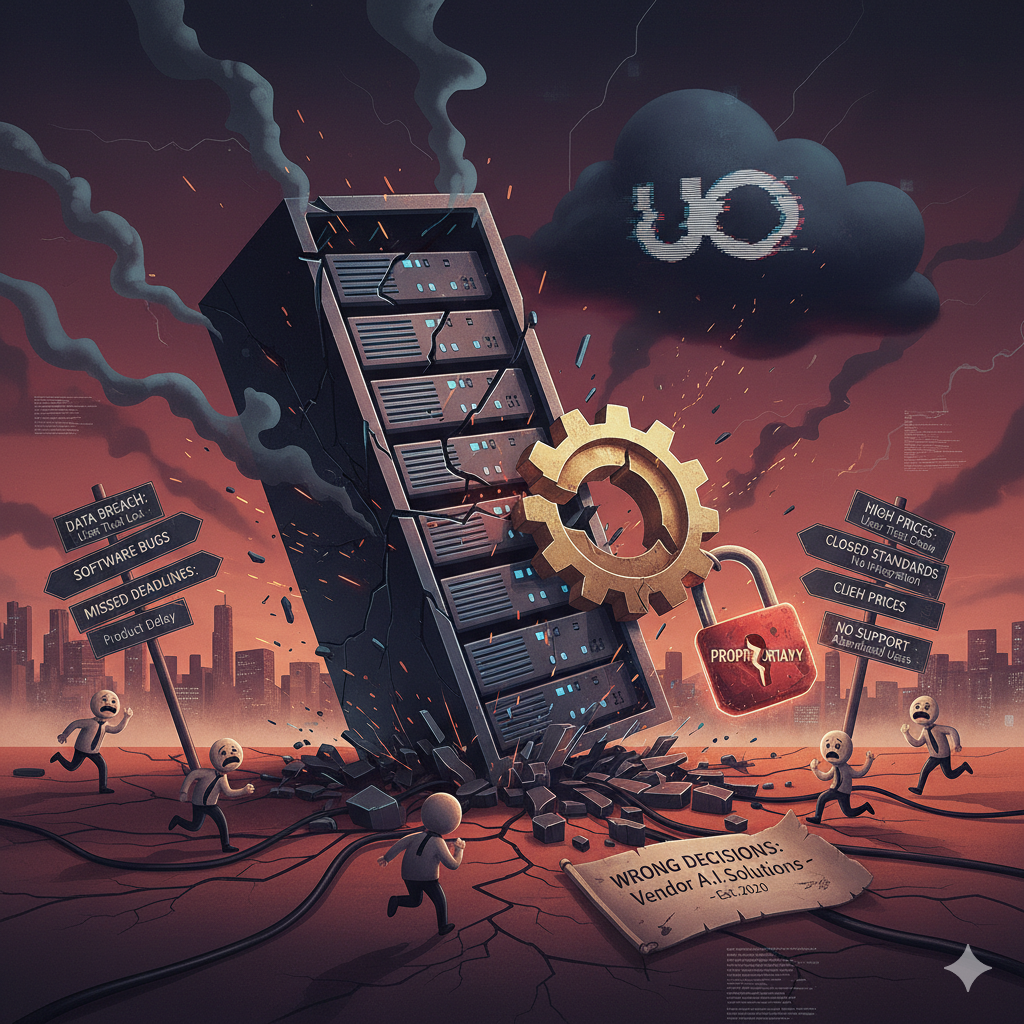
Choosing a technology vendor is rarely seen as a long-term risk. Decisions are often made quickly based on pricing, promises, or immediate needs. At the time, everything looks manageable.
But vendor decisions have a unique characteristic:
they are much harder to reverse than they are to make.
Once systems, data, workflows, and teams are built around a vendor, switching becomes expensive, disruptive, and sometimes nearly impossible. Many organizations realize too late that a short-term choice has locked them into long-term limitations.
Below are the most common vendor decisions that seem reasonable at first but become extremely difficult to undo in real business environments.
1. Choosing Vendors Based Only on Cost
Cost-driven vendor selection is one of the most common and damaging mistakes. While budgets matter, choosing the lowest-priced option often ignores long-term consequences.
Low-cost vendors may:
- Lack scalability
- Offer limited support
- Use outdated technology
- Restrict customization
Initially, savings look impressive. Over time, hidden costs appear through downtime, inefficiency, poor performance, and frequent fixes.
Once core systems depend on a low-quality vendor, replacing them becomes complex and risky. The business ends up paying more not less over the long run.
Cheap vendors are easy to sign.
They are very hard to escape.
2. Vendor Lock-In Through Proprietary Systems
Some vendors design their solutions to lock customers in. They use proprietary tools, closed architectures, or non-standard data formats that make migration difficult.
Common signs of lock-in include:
- Limited data export options
- Custom integrations that don’t work elsewhere
- Exclusive platforms with no alternatives
- High switching or exit fees
At first, these systems may work smoothly. But as business needs change, flexibility disappears. When organizations want to switch vendors, they discover that data migration is costly, time-consuming, and risky. In some cases, starting from scratch feels easier than migrating. Vendor lock-in quietly removes choice long after the contract is signed.
3. Ignoring Integration and Compatibility Early On
Vendor decisions are often made in isolation, without considering how new tools will integrate with existing systems.
Problems arise when:
- New vendors don’t integrate with core platforms
- APIs are limited or unreliable
- Manual work is required to connect systems
- Data synchronization is inconsistent
Initially, teams create workarounds. Over time, these workarounds become permanent, fragile processes. When integration issues pile up, replacing the vendor affects multiple systems at once. What started as a single decision becomes deeply embedded across the organization. Poor integration choices don’t fail loudly they quietly entangle everything else.
4. Over-Reliance on a Single Vendor for Critical Operations
Depending heavily on one vendor for multiple critical functions increases risk significantly. While consolidation may seem efficient, it creates a single point of failure.
Over-reliance can result in:
- Limited negotiation power
- Reduced service quality over time
- Exposure to vendor outages or policy changes
- Business disruption if the vendor fails
When one vendor controls infrastructure, data, and support, exiting becomes extremely difficult. Organizations may tolerate declining service simply because switching would be too disruptive. A vendor that becomes indispensable can slowly become unaccountable.
5. Underestimating the Impact on People and Processes
Vendor decisions affect more than technology they reshape workflows, skills, and daily operations.
Over time:
- Employees are trained around specific tools
- Processes are optimized for vendor limitations
- Knowledge becomes vendor-specific
- Resistance to change increases
Even if a better vendor becomes available, switching means retraining staff, redesigning workflows, and managing productivity dips. The longer a vendor is in place, the more deeply it becomes woven into how people work. Undoing a vendor decision often means undoing habits, not just contracts.
6. Contracts That Limit Flexibility and Exit Options
Vendor contracts are often signed quickly, with little attention to exit terms. This creates long-term constraints that only become visible later.
Problematic contract elements include:
- Long lock-in periods
- Automatic renewals
- High termination fees
- Restricted data ownership
When business needs change, these contracts prevent quick adaptation. Organizations may continue using an unsuitable vendor simply because leaving is legally or financially painful. A contract that limits exit is not protection it is a trap.
Final Thoughts: Vendor Decisions Shape the Future
Vendor choices are not just purchasing decisions.
They are strategic commitments that shape flexibility, resilience, and growth.
The hardest vendor decisions to undo share common traits:
- Short-term thinking
- Poor evaluation of long-term impact
- Lack of exit planning
Smart organizations evaluate vendors not only on what they offer today, but on how easy it will be to change tomorrow. Because the true cost of a vendor decision is rarely visible at the beginning it appears when the business tries to move forward.