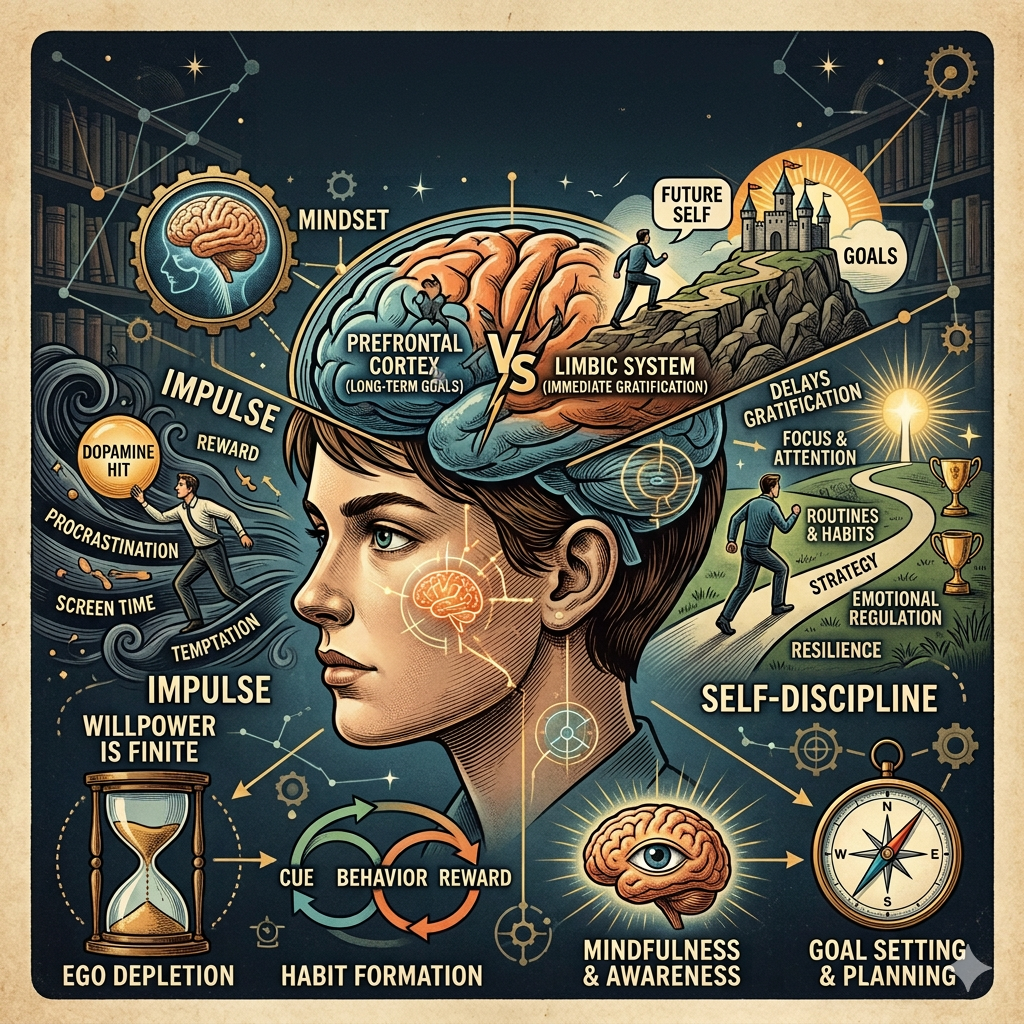
Self-discipline is often described as the ability to control one’s actions, emotions, and impulses in order to achieve long-term goals. While it is commonly associated with productivity, success, and personal development, self-discipline is not simply a matter of strong willpower. Instead, it reflects a complex interaction between psychological processes, habits, motivation, and decision-making systems within the brain. Understanding the psychology of self-discipline helps explain why some individuals consistently follow through on their commitments while others struggle to maintain focus and persistence.
At its core, self-discipline involves the ability to delay immediate gratification in favor of future rewards. Humans naturally prefer outcomes that provide quick satisfaction. This preference is rooted in the brain’s reward system, which responds strongly to activities that produce immediate pleasure or relief. However, many meaningful goals—such as education, career growth, health improvement, or financial stability—require sustained effort over long periods of time. Self-discipline allows individuals to prioritize these long-term outcomes even when short-term temptations appear more appealing.
One important psychological factor in self-discipline is self-regulation, the ability to monitor and adjust one’s behavior according to goals or standards. Self-regulation involves several mental processes, including planning, evaluating progress, and controlling impulses. When individuals set clear goals and regularly assess their progress, they strengthen their ability to maintain disciplined behavior.
The brain plays a crucial role in this process. Areas associated with planning, reasoning, and impulse control help regulate behavior by balancing emotional urges with long-term priorities. When these cognitive systems are actively engaged, individuals are better able to resist distractions and remain focused on their objectives.
Another key element of self-discipline is motivation. Discipline does not operate independently of motivation; instead, the two are closely connected. Motivation provides the reason for pursuing a goal, while discipline provides the structure needed to sustain effort. When individuals clearly understand the purpose behind their actions, maintaining disciplined behavior becomes easier.
However, motivation can fluctuate over time. Initial enthusiasm often fades as challenges appear or progress slows. During these periods, self-discipline functions as a stabilizing force that keeps individuals moving forward even when motivation temporarily decreases.
Habits also play a powerful role in disciplined behavior. When actions are repeated consistently, they gradually become automatic patterns. These patterns require less conscious effort because the brain learns to perform them with minimal deliberation. For example, individuals who establish regular study routines, exercise habits, or work schedules often rely less on moment-to-moment willpower because the behavior becomes part of their daily structure.
The relationship between environment and behavior also influences self-discipline. People often assume that discipline depends entirely on personal strength, but the surrounding environment can significantly affect behavior. Distractions, temptations, and competing priorities can weaken disciplined efforts. On the other hand, environments designed to support focus and structure can make disciplined behavior easier to maintain.
For example, removing distractions from a workspace, establishing consistent routines, and setting clear priorities can reduce the mental effort required to stay on track. By shaping their environment intentionally, individuals create conditions that support disciplined choices.
Emotional regulation is another important component of self-discipline. Challenges, setbacks, or frustration can trigger emotional responses that interfere with progress. When individuals experience disappointment or stress, they may feel tempted to abandon their goals. Developing emotional awareness and resilience helps maintain disciplined behavior during difficult moments.
Another psychological aspect involves goal clarity. Vague or unrealistic goals often weaken discipline because individuals struggle to measure progress or maintain motivation. In contrast, clearly defined goals provide direction and measurable milestones. When progress becomes visible, individuals are more likely to remain committed to their efforts.
Time perception also affects disciplined behavior. Humans often underestimate the long-term consequences of present actions while overvaluing immediate comfort or convenience. This tendency can make it difficult to maintain behaviors that require patience and persistence. By consciously considering long-term outcomes, individuals can strengthen their commitment to disciplined choices.
Social influence also contributes to the development of self-discipline. Individuals are more likely to maintain disciplined habits when they are surrounded by supportive environments that value persistence and responsibility. Observing others who demonstrate disciplined behavior can provide both motivation and practical examples of how to maintain consistency.
Despite its benefits, self-discipline is sometimes misunderstood as constant restriction or denial. In reality, effective discipline often involves strategic decision-making rather than continuous resistance. Instead of relying solely on willpower to resist temptations, disciplined individuals often structure their routines to minimize unnecessary choices.
For example, planning tasks in advance, scheduling priorities, and establishing regular habits reduce the number of decisions required throughout the day. This approach conserves mental energy and helps maintain focus on important goals.
It is also important to recognize that self-discipline develops gradually. Rather than appearing suddenly, it strengthens through repeated practice. Each time individuals choose actions aligned with their goals, they reinforce patterns that support disciplined behavior.
Another helpful perspective is viewing setbacks as part of the learning process. Even highly disciplined individuals occasionally encounter difficulties or temporary lapses. Instead of interpreting these moments as failure, they can treat them as opportunities to adjust strategies and continue progressing.
Ultimately, the psychology of self-discipline reflects the interaction between motivation, habits, environment, emotional regulation, and long-term thinking. It is not simply a matter of resisting temptation but rather a structured approach to aligning daily actions with meaningful objectives.
By understanding the psychological mechanisms behind disciplined behavior, individuals can develop strategies that support consistent progress. Clear goals, supportive environments, emotional resilience, and effective routines all contribute to strengthening discipline over time.
In a world filled with distractions and competing demands, self-discipline becomes an essential skill for achieving meaningful goals. When individuals learn to manage their impulses, focus their attention, and maintain consistent effort, they create the conditions necessary for long-term success and personal growth.