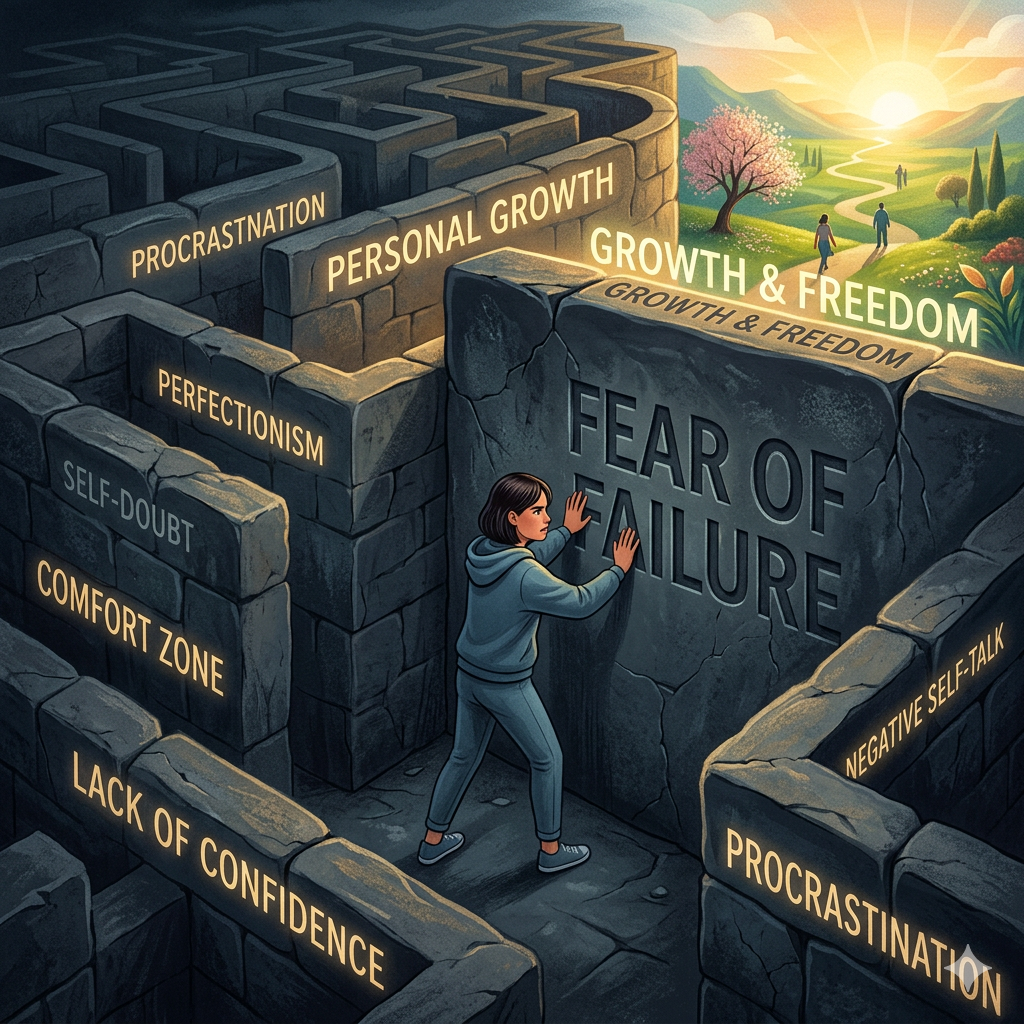
Personal growth is often described as a continuous process of learning, adapting, and improving one’s abilities, mindset, and understanding of the world. Many individuals express a desire to grow, develop new skills, and achieve meaningful goals. However, despite strong intentions, progress often slows or stops because of internal psychological obstacles. Understanding the mental barriers that prevent personal growth helps explain why people sometimes remain stuck in familiar patterns even when opportunities for improvement are available.
One of the most significant obstacles to growth is fear of failure. Failure can feel threatening because it challenges self-confidence and exposes individuals to potential criticism or disappointment. When people anticipate the possibility of failing, they may avoid situations that involve uncertainty or risk. This avoidance creates a protective comfort zone where mistakes are less likely to occur. While this strategy reduces immediate anxiety, it also limits opportunities to learn and develop new abilities.
Closely related to this barrier is the tendency toward comfort zone thinking. The human brain naturally prefers environments that feel predictable and familiar. Routine activities require less mental effort because individuals already understand how to perform them. Stepping into unfamiliar situations demands learning, adaptation, and sometimes temporary discomfort. As a result, many individuals unconsciously remain within routines that feel safe even when those routines no longer contribute to growth.
Another common barrier involves self-doubt. Individuals who question their abilities may hesitate to pursue challenging goals or new opportunities. Self-doubt can emerge from past experiences, negative feedback, or comparisons with others. When people repeatedly focus on perceived limitations, they may begin to underestimate their potential. This mindset reduces motivation and discourages efforts that could lead to improvement.
The way individuals interpret challenges also influences personal growth. Some people adopt a fixed mindset, believing that abilities and intelligence are permanent traits that cannot significantly change. When individuals hold this belief, they may avoid difficult tasks because they fear that failure would reveal a lack of ability. In contrast, individuals who view skills as developable are more likely to see challenges as opportunities to learn.
Another psychological barrier is perfectionism. While striving for high standards can sometimes motivate improvement, excessive perfectionism can create pressure that prevents action. Individuals who believe that results must be flawless may delay starting new projects or learning new skills because they fear producing imperfect outcomes. Over time, this hesitation can slow progress and reduce opportunities for growth.
Emotional responses also play a significant role in limiting development. Feelings such as embarrassment, frustration, or disappointment can discourage individuals from continuing efforts after encountering obstacles. When these emotions become overwhelming, people may choose to abandon goals rather than persist through temporary difficulties.
Social influence can reinforce these mental barriers as well. Individuals often absorb expectations and attitudes from their surrounding environment. If family members, colleagues, or social groups emphasize caution or discourage experimentation, individuals may internalize these perspectives. Over time, these external messages can shape beliefs about what is possible or appropriate to pursue.
Another important barrier is overthinking, which occurs when individuals analyze potential outcomes excessively before taking action. While thoughtful planning is valuable, constant analysis can create uncertainty and delay progress. When people focus too heavily on possible risks or complications, they may postpone decisions indefinitely.
Comparison with others can also interfere with personal growth. Observing the achievements of peers may inspire motivation in some situations, but it can also produce feelings of inadequacy. When individuals measure their progress solely against others’ accomplishments, they may overlook their own development and lose confidence in their abilities.
Another obstacle involves resistance to change. Human thinking often relies on established beliefs and mental frameworks that help interpret the world. When new ideas challenge these frameworks, individuals may feel uncomfortable or uncertain. Instead of revising existing assumptions, the brain sometimes defends familiar perspectives. This resistance can limit openness to new knowledge and experiences.
The perception of time can also influence personal growth. Some individuals assume that meaningful improvement must occur quickly. When progress appears slow, they may become discouraged and conclude that their efforts are ineffective. In reality, many forms of growth require patience and consistent effort over extended periods.
Despite these barriers, mental obstacles are not permanent limitations. Awareness is the first step toward overcoming them. When individuals recognize the psychological patterns that influence their behavior, they gain the ability to respond more intentionally.
Developing self-awareness allows people to observe their thoughts, emotions, and reactions more objectively. Instead of automatically accepting limiting beliefs, they can question whether those beliefs accurately reflect reality. This reflective process opens the possibility of replacing restrictive assumptions with more constructive perspectives.
Another helpful strategy involves focusing on incremental progress. Rather than expecting immediate transformation, individuals can concentrate on small improvements over time. Each step forward builds confidence and reinforces the belief that growth is possible.
Learning to reinterpret failure is also essential. Instead of viewing mistakes as evidence of inability, individuals can treat them as information that helps refine future strategies. Many important achievements emerge after multiple attempts and adjustments.
Supportive environments also contribute to personal growth. Encouragement from mentors, colleagues, or friends can help individuals maintain motivation during challenging periods. Positive social support reinforces the idea that learning and improvement are ongoing processes.
Ultimately, the mental barriers that prevent personal growth are closely connected to fear, uncertainty, and the brain’s preference for stability. These psychological mechanisms evolved to protect individuals from risk, but they can sometimes limit exploration and development in modern environments.
By understanding these mental patterns, individuals can gradually reduce their influence. When people challenge limiting beliefs, accept temporary discomfort, and remain open to learning, they create conditions that support continuous improvement.
Personal growth rarely occurs through sudden transformation. Instead, it develops through consistent effort, curiosity, and willingness to adapt. By recognizing and addressing the mental barriers that restrict progress, individuals can move beyond familiar limitations and pursue opportunities that lead to deeper learning and development.