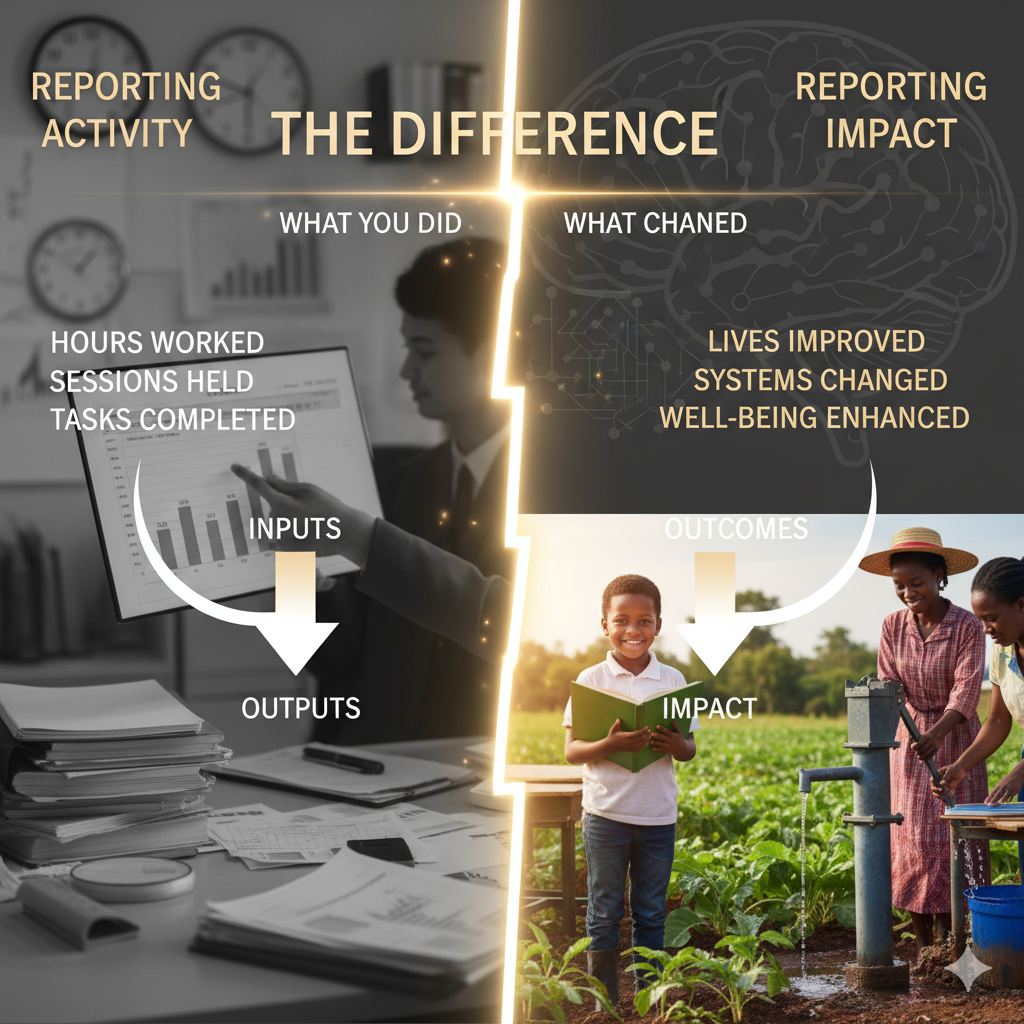
In today’s data-saturated business environment, organizations produce more reports than ever before. Weekly dashboards summarize campaigns, monthly presentations track performance, and quarterly reviews highlight progress. Charts display impressions, clicks, leads, hours worked, calls made, and emails sent. Yet despite this abundance of information, a critical question often goes unasked: are companies reporting activity, or are they reporting impact? The difference between reporting activity and reporting impact determines whether data drives strategic growth or merely documents motion. Activity shows what was done. Impact reveals what changed. Confusing the two creates the illusion of productivity without proof of progress.
Reporting activity focuses on operational metrics. Marketing teams report the number of posts published, ads launched, emails delivered, or events hosted. Sales departments highlight calls made, meetings scheduled, and proposals sent. Operations teams measure tasks completed and tickets resolved. These metrics are not inherently useless. They provide visibility into effort and workflow. However, effort does not automatically translate into outcomes. When leadership evaluates performance solely through activity indicators, teams may optimize for volume rather than value.
Impact reporting, by contrast, connects actions to measurable business results. Instead of stating how many campaigns were executed, impact reporting demonstrates how those campaigns influenced revenue growth, customer acquisition, retention rates, or profit margins. It answers not only “What did we do?” but “What difference did it make?” This distinction shifts focus from productivity metrics to performance metrics. In mature organizations, success is defined by contribution, not completion.
The danger of prioritizing activity metrics lies in misaligned incentives. If marketing teams are evaluated on the number of leads generated, they may pursue quantity over quality. A surge in low-intent leads inflates reports but strains sales resources. Conversion rates decline, and morale suffers. Without connecting lead generation to customer lifetime value or revenue contribution, the organization celebrates surface-level growth while profitability stagnates. Reporting activity can unintentionally encourage behaviours that undermine strategic objectives.
Financial analysis highlights the contrast clearly. Consider a campaign that generates significant engagement and traffic. An activity-focused report may emphasize impressions, click-through rates, and social shares. An impact-focused report examines whether those visitors converted into paying customers, how much revenue they generated, and whether acquisition costs were justified. Only the latter perspective informs strategic investment decisions. Without impact evaluation, budgeting becomes reactive rather than rational.
Another dimension involves time horizons. Activity metrics often provide immediate feedback. Teams can track daily engagement or weekly outreach efforts. Impact metrics, however, may require longitudinal analysis. Retention rates, churn reduction, and brand equity improvements unfold over months or quarters. Organizations must resist the temptation to prioritize short-term visibility over long-term value. Sustainable growth depends on patience and disciplined measurement.
The proliferation of business intelligence tools has amplified the activity-reporting trend. Modern dashboards make it easy to track granular actions in real time. However, real-time visibility can create overemphasis on micro-adjustments. Teams may celebrate small metric improvements without assessing cumulative impact. A slight increase in engagement might not meaningfully influence revenue. Without strategic context, data becomes noise rather than guidance.
Impact reporting requires integration across departments. Marketing actions influence sales outcomes. Sales performance affects customer retention. Customer service quality shapes brand perception. If departments operate in silos, measuring impact becomes fragmented. Establishing unified data governance frameworks ensures that metrics align across functions. Shared definitions of success enable consistent evaluation. For example, defining what constitutes a “qualified customer” across teams prevents discrepancies that distort reporting.
The distinction also affects organizational culture. When leadership requests detailed activity logs, employees focus on documenting tasks. When leadership requests impact analysis, employees focus on results. Cultural signals shape priorities. Companies that reward measurable contribution cultivate accountability and innovation. Those that reward busyness risk burnout without progress.
A key component of impact reporting is linking metrics to unit economics. For instance, reporting the number of website visitors is incomplete without understanding conversion efficiency and revenue per visitor. Impact emerges when traffic translates into profit. Similarly, tracking customer service tickets resolved is insufficient without evaluating satisfaction scores and repeat purchase behavior. Metrics gain meaning when tied to economic outcomes.
The role of predictive analytics further differentiates activity from impact. Activity reporting describes what has already occurred. Predictive models estimate future consequences of current actions. By forecasting churn probability or demand fluctuations, organizations can act proactively. This forward-looking perspective transforms reporting from descriptive to strategic. Impact reporting not only explains past performance but shapes future direction.
Measurement frameworks such as key performance indicators must reflect strategic intent. If KPIs emphasize output volume, teams will maximize output. If KPIs emphasize financial and customer outcomes, teams will prioritize effectiveness. Selecting the right indicators requires careful evaluation of business objectives. Misaligned KPIs perpetuate activity bias.
Transparency plays an essential role in reinforcing impact orientation. Clear communication of how individual contributions influence broader results fosters ownership. When employees understand the link between their actions and company performance, engagement increases. Impact reporting bridges operational roles with strategic vision.
The risk of relying solely on activity metrics becomes evident during economic downturns. In constrained environments, organizations must justify expenditures rigorously. Reports highlighting effort without demonstrable return lose credibility. Conversely, impact-based reports provide evidence for continued investment. Demonstrating clear return on marketing spend or operational improvements strengthens resilience during uncertainty.
Technology implementation also reflects this difference. Companies often invest in advanced analytics infrastructure, expecting improved reporting. However, without redefining reporting objectives, new tools merely enhance activity tracking. True transformation requires redefining questions before upgrading systems. Tools should support strategic evaluation rather than perpetuate superficial measurement.
A practical approach to shifting from activity to impact reporting involves three steps. First, identify core business objectives such as revenue growth, market expansion, or retention improvement. Second, map activities to these objectives, clarifying causal relationships. Third, design dashboards that prioritize outcome metrics while retaining supporting activity data. This hierarchy ensures clarity without sacrificing operational visibility.
Ultimately, reporting activity answers the question, “How busy are we?” Reporting impact answers, “How effective are we?” In competitive markets, effectiveness determines survival. Organizations that master impact measurement gain strategic clarity, allocate resources efficiently, and foster accountability. Those that remain focused on activity risk celebrating effort while overlooking outcomes.
The future of performance management belongs to companies that elevate reporting from documentation to decision-making. By aligning metrics with meaningful results, integrating cross-functional data, and emphasizing long-term value, businesses transform reporting into a strategic asset. Activity shows motion, but impact proves progress. Understanding and applying this distinction defines whether analytics serves as a record of effort or a catalyst for sustainable growth.