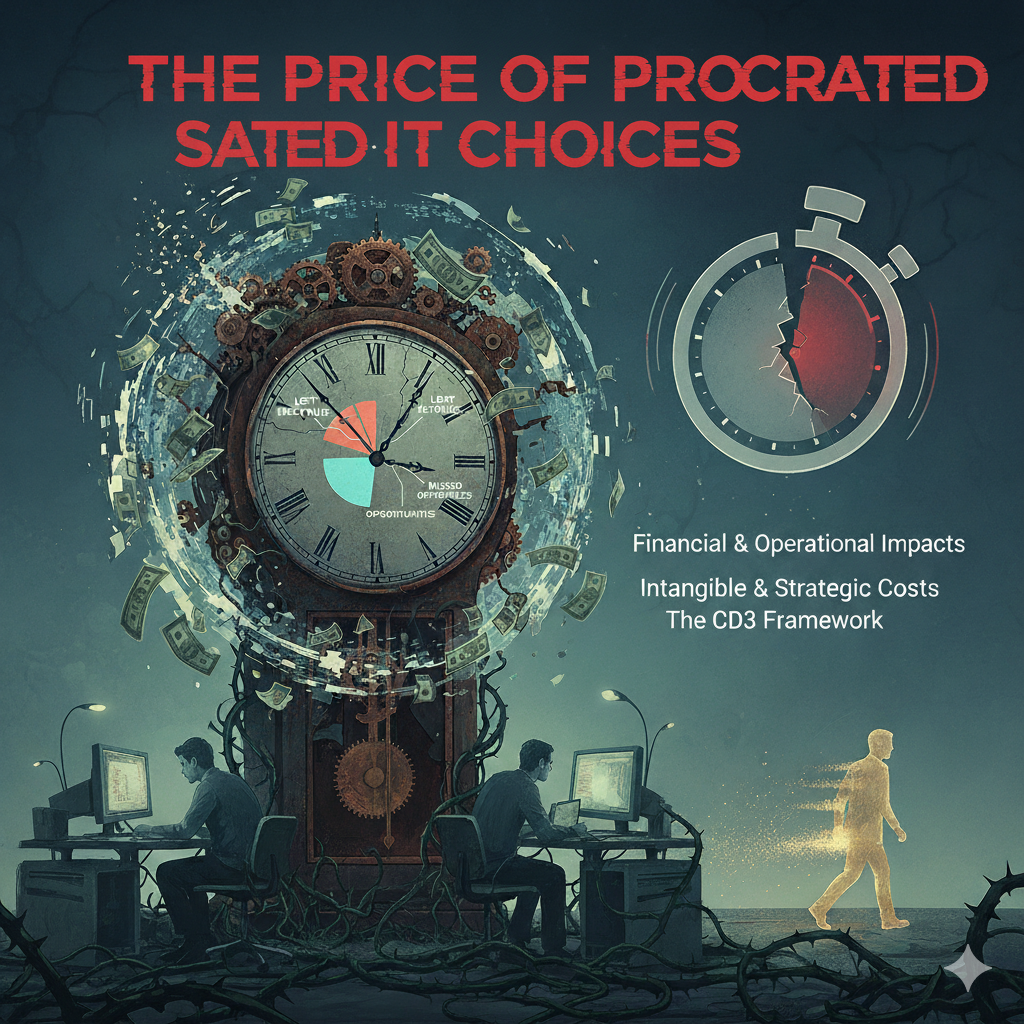
In business, timing is rarely neutral. A delayed hiring decision slows expansion. A delayed product launch weakens competitive positioning. A delayed market entry allows competitors to gain ground. The same principle applies often more severely to technology decisions. IT choices are frequently postponed. Leaders wait for clearer budgets. They hope existing systems will “hold for another quarter.” They delay upgrades to avoid disruption. They postpone cybersecurity improvements because nothing has happened yet. On the surface, delay feels safe. It avoids immediate cost. It prevents short-term inconvenience. But in reality, delayed IT decisions create compounding operational, financial, and strategic consequences. Unlike visible crises, the damage builds quietly. This is the true cost of waiting.
1. The Illusion of Waiting for the Right Time
Many organizations convince themselves that postponing IT modernization is a prudent financial strategy. Leadership often justifies delay by citing budget cycles, operational stability, or competing priorities. On the surface, existing systems appear functional, and avoiding disruption feels responsible. However, the assumption that there will be a “perfect time” for a seamless upgrade is rarely realistic. Technology ecosystems evolve continuously, and what seems stable today may already be deteriorating beneath the surface.
While decisions are deferred, enterprise infrastructure degradation continues silently. Vendor support periods shrink, software compatibility declines, and performance bottlenecks multiply across the enterprise technology stack. Security patches become less effective on outdated platforms, and integration with modern tools grows increasingly complex. These gradual declines rarely trigger urgent alarms, which makes them even more dangerous. By the time leadership recognizes the problem, the cost and scope of remediation have expanded significantly.
Waiting also creates misalignment between technology capabilities and long-term business strategy. Growth initiatives demand scalability and flexibility within the digital operations framework, yet legacy systems restrict adaptability. Over time, organizations normalize inefficiency within the legacy IT environment, convincing themselves that slow processes and manual workarounds are unavoidable. In reality, the delay compounds fragility within the broader business technology ecosystem, increasing both operational risk and financial exposure.
2. Technical Debt and Growing System Complexity
Every delayed upgrade adds to expanding technical debt accumulation. Technical debt goes beyond outdated code—it includes unsupported systems, temporary integrations, redundant data flows, and workaround processes embedded inside the enterprise application architecture. When organizations defer structured improvements, they often implement short-term fixes that bypass best practices in IT governance frameworks. These shortcuts may solve immediate problems but introduce long-term instability.
As complexity grows, systems become increasingly interdependent. Small updates in one area may disrupt processes in another, creating a fragile web inside the enterprise software infrastructure. Documentation may lag behind reality, and institutional knowledge becomes concentrated among a few employees familiar with the legacy environment. This dependency increases operational risk and makes modernization more intimidating.
Data inconsistency is another consequence. Over time, fragmented databases weaken analytics capabilities within the enterprise data management ecosystem. Reporting becomes slower, and reconciliation efforts increase. When modernization eventually becomes unavoidable, migration efforts are far more complicated due to years of deferred maintenance and accumulated inefficiencies. What could have been incremental improvement turns into large-scale transformation driven by unresolved technical debt management challenges.
3. Productivity Loss That Goes Unnoticed
Delayed IT decisions rarely produce immediate operational failure. Instead, they create incremental friction that spreads across daily workflows. Employees navigating slow platforms or disconnected systems within the workflow automation environment gradually adapt by creating manual workarounds. Spreadsheets, duplicate data entry, and email-based approvals become common substitutes for streamlined automation.
These informal processes weaken oversight within the enterprise IT operations framework and increase the risk of human error. While each workaround may seem minor, collectively they drain productivity across departments. Employees spend additional hours reconciling information rather than focusing on strategic tasks. Over time, inefficiencies become embedded in the digital productivity infrastructure, lowering overall organizational performance.
Morale also declines when employees feel constrained by outdated tools. High-performing professionals expect modern systems that align with industry standards. When systems lag behind expectations, engagement decreases. Small daily delays compound into measurable financial impact, undermining initiatives designed to improve efficiency within the broader enterprise process optimization strategy.
4. Escalating Cybersecurity Exposure
The cybersecurity landscape evolves rapidly, yet many organizations delay updates to their enterprise cybersecurity architecture due to cost concerns or operational hesitations. Outdated authentication methods, unsupported operating systems, and inconsistent patch cycles increase vulnerability within the digital risk management infrastructure. Cybercriminals often target legacy systems precisely because they lack modern security controls.
Delaying upgrades also jeopardizes compliance. Regulatory frameworks increasingly require strong controls within the enterprise data protection framework, including encryption standards, access management protocols, and monitoring capabilities. Failure to maintain these standards may result in financial penalties, reputational damage, or operational shutdowns.
A single breach can trigger cascading consequences—legal costs, customer distrust, increased insurance premiums, and productivity losses. Proactive investment in advanced threat detection systems and resilient network security architecture reduces exposure significantly. In contrast, postponing improvements shifts risk forward, increasing the potential scale of future damage.
5. Competitive Disadvantage and Strategic Delay
Technology now defines competitive agility. Organizations that adopt modern cloud computing infrastructure, implement integrated enterprise resource planning systems, and leverage predictive analytics within their data-driven decision platforms gain measurable advantages. They can adapt pricing models, optimize supply chains, and respond to market shifts faster than competitors constrained by legacy systems.
Delayed investment slows innovation. Outdated tools limit scalability, reduce visibility into operational performance, and hinder personalization within customer relationship management platforms. As competitors strengthen their digital transformation initiatives, organizations that postpone upgrades lose ground incrementally. Market share shifts quietly but steadily.
Strategic delay does not preserve stability—it weakens it. Innovation depends on a flexible enterprise technology foundation capable of supporting experimentation and growth. Without it, organizations struggle to maintain relevance in rapidly evolving industries.
6. IT Teams Shift from Innovation to Maintenance
When modernization efforts stall, IT teams shift into continuous maintenance mode. Instead of advancing the enterprise innovation roadmap, they dedicate resources to troubleshooting integration failures, patching outdated software, and maintaining aging hardware inside the enterprise IT operations ecosystem. This reactive cycle consumes time and limits strategic initiatives.
Over time, skilled professionals may become disengaged. Talented engineers seek environments that invest in forward-thinking solutions and scalable architecture. Without investment in scalable IT architecture, experimentation with automation, artificial intelligence, or analytics expansion becomes constrained. IT transitions from innovation driver to cost center within the broader business technology strategy.
This shift has long-term consequences. Organizations unable to empower their IT teams for strategic growth risk stagnation. Modernization is not merely about systems—it is about enabling people to contribute at their highest level.
7. Financial Shock Instead of Financial Stability
Postponing upgrades often appears fiscally conservative, yet it increases financial volatility. Aging systems require emergency fixes, extended vendor contracts, and specialized consultants to sustain the enterprise infrastructure lifecycle. These unplanned expenses disrupt budgeting processes and reduce predictability.
When modernization is eventually unavoidable, organizations face sudden capital expenditures rather than phased investments aligned with a structured technology roadmap planning approach. Downtime during rushed transitions can interrupt revenue streams and affect customer satisfaction. Proactive planning distributes costs evenly and supports sustainability within the enterprise financial governance framework.
Short-term savings achieved through delay frequently result in long-term financial strain. Strategic investment, carefully sequenced and aligned with business goals, provides stability instead of shock.
8. Leadership Confidence and Data Integrity
Accurate data drives executive decision-making. When outdated systems fail to integrate seamlessly within the enterprise business intelligence system, inconsistencies emerge. Disconnected reporting environments reduce trust in dashboards and weaken the reliability of insights generated by the real-time performance monitoring infrastructure.
Leadership teams may hesitate to commit to growth initiatives without confidence in the data. Strategic discussions shift toward reconciling discrepancies rather than exploring opportunities. Fragmentation within the enterprise data governance model undermines clarity and delays action.
Modern, integrated platforms restore confidence by ensuring consistent metrics and streamlined reporting. Delayed IT decisions, in contrast, erode trust in the information that guides long-term strategy.
9. Opportunity Cost as the Largest Hidden Expense
The most significant impact of delay is often invisible. By postponing investment in automation platforms, predictive analytics, and scalable cloud-based enterprise systems, organizations miss opportunities to enhance efficiency and expand revenue. Modern tools embedded within a strong digital innovation framework enable faster product launches, optimized supply chains, and improved customer engagement.
Opportunity cost accumulates quietly. Competitors that embrace modernization refine processes and strengthen capabilities while others maintain outdated workflows. Internal teams spend time managing inefficiencies instead of creating value. Though not reflected directly on financial statements, lost opportunity represents the most substantial long-term cost of delayed enterprise technology investment strategy decisions.
10. Regaining Control Through Proactive Governance
Addressing delayed IT decisions requires structured governance rather than reactive spending. Organizations should implement regular IT infrastructure audits, establish clear enterprise architecture alignment strategies, and maintain multi-year digital transformation roadmaps. These practices ensure upgrades occur in manageable phases aligned with business priorities.
Strong technology lifecycle management practices reduce risk and support compliance within the enterprise security ecosystem. Executive sponsorship strengthens alignment between business objectives and technical execution. When modernization becomes proactive instead of reactive, organizations regain control over timing, cost, and risk.
In today’s competitive environment, delay is rarely neutral. It compounds complexity, increases exposure, limits innovation, and elevates long-term expense. Proactive investment transforms technology from a maintenance burden into a strategic enabler within the broader enterprise growth strategy.