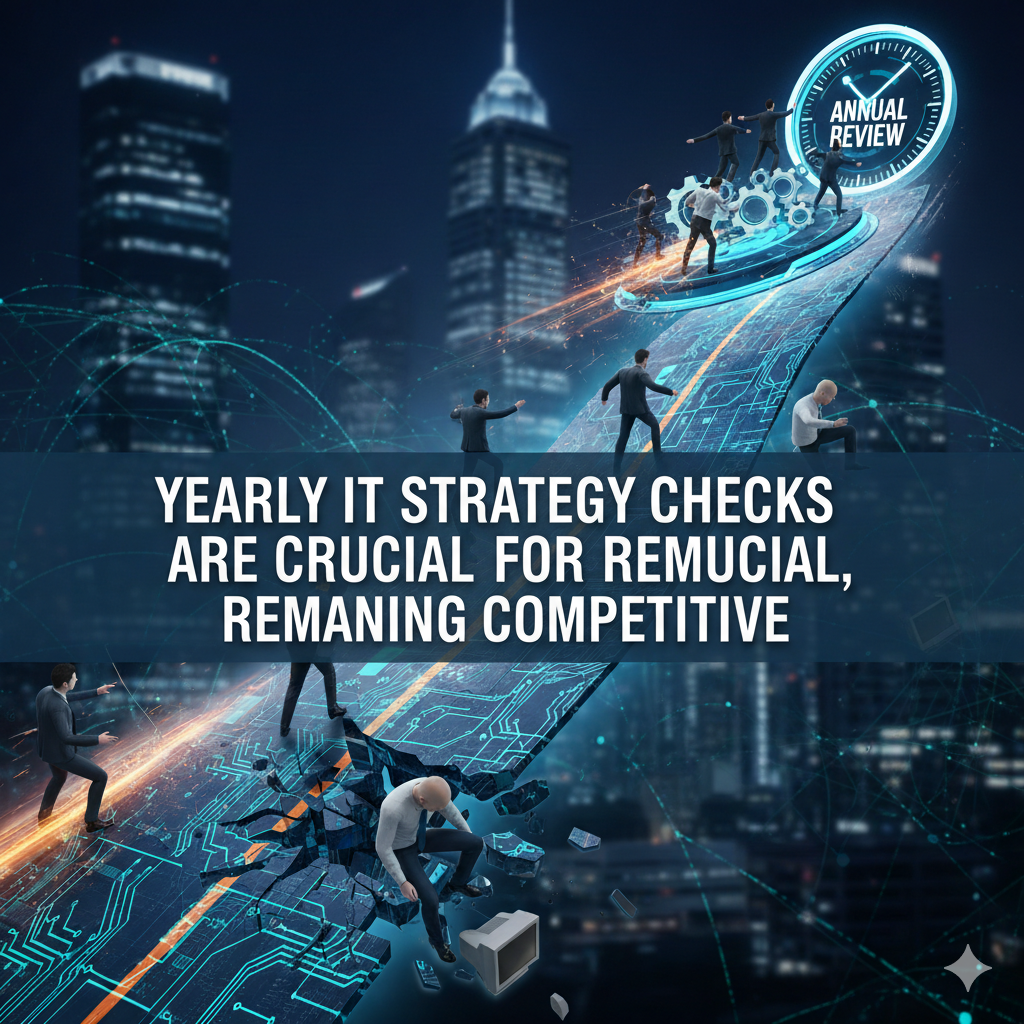
In an era where digital transformation reshapes industries at an accelerating pace, an organization that fails to conduct an annual review of its IT Strategy is not merely standing still but gradually losing competitive ground, because technology ecosystems, threat landscapes, regulatory requirements, and customer expectations evolve continuously, and a static plan no matter how well designed initially inevitably becomes misaligned with current realities.
An effective Technology Roadmap is not a fixed document meant to guide operations indefinitely, but a living strategic framework that must be reassessed regularly to ensure alignment with business objectives, operational capacity, and emerging opportunities, since market conditions can shift dramatically within a single fiscal year due to innovation cycles, economic fluctuations, or disruptive competitors.
Organizations that neglect structured reviews often assume that stable infrastructure and uninterrupted system performance indicate strategic adequacy, yet operational continuity does not equate to strategic relevance, because systems that function reliably may still be outdated, inefficient, or incapable of supporting future growth initiatives. Without an annual reassessment, Digital Transformation Initiatives risk becoming fragmented, as departments pursue isolated technology upgrades that may conflict with broader enterprise architecture principles, thereby creating silos that complicate integration and reduce long-term scalability.
The rapid evolution of Cybersecurity Threats alone justifies regular evaluation, since attack vectors, ransomware methodologies, phishing sophistication, and regulatory scrutiny intensify each year, requiring organizations to revisit risk tolerance thresholds, control effectiveness, and incident response readiness rather than relying on outdated assumptions. Cloud adoption further underscores the need for recurring strategy reviews, because Cloud Infrastructure Models evolve continuously, introducing new service offerings, pricing structures, compliance considerations, and architectural patterns that can significantly alter cost efficiency and operational flexibility.
In many enterprises, IT budgets are approved annually, yet strategic frameworks remain unchanged for multiple years, creating a disconnect between financial planning and long-term technology direction, which may result in reactive spending rather than proactive investment. A structured annual review enables leadership to evaluate Return on Technology Investment, ensuring that implemented solutions deliver measurable value in productivity, customer engagement, operational efficiency, or risk reduction, rather than persisting due to sunk-cost bias.
The absence of periodic reassessment also increases the likelihood of Technical Debt accumulation, as legacy systems remain operational long past their optimal lifecycle, consuming maintenance resources and limiting innovation capacity while silently increasing operational risk. As organizations expand into new markets, adopt hybrid work models, or introduce digital customer channels, their infrastructure requirements evolve correspondingly, and without revisiting strategic assumptions, capacity planning may lag behind demand, leading to performance bottlenecks or service disruptions.
Regulatory environments are equally dynamic, with new data protection laws, industry-specific compliance standards, and cross-border data transfer restrictions emerging regularly, making annual Compliance Alignment Reviews essential for avoiding legal and reputational exposure. Another critical factor involves workforce capability, since technology strategies must align with internal skill sets, training capacity, and recruitment pipelines, and as emerging technologies such as artificial intelligence, automation, and advanced analytics become mainstream, organizations must reassess whether they possess the expertise necessary to implement and govern these tools effectively.
Annual reviews also provide an opportunity to evaluate Vendor Performance, contract structures, service-level agreements, and integration effectiveness, ensuring that external partnerships continue to support strategic objectives rather than constrain flexibility. When organizations fail to revisit strategy, they risk allowing short-term operational urgencies to dictate long-term direction, resulting in incremental adjustments that gradually erode coherence and alignment across systems and processes.
Customer expectations evolve rapidly in the digital age, with demand for seamless omnichannel experiences, real-time responsiveness, and personalized interactions increasing annually, and an outdated strategy may overlook these expectations, weakening competitive positioning. Strategic review cycles create space for structured Risk Reassessment, enabling leadership to identify emerging vulnerabilities, reassess business continuity plans, and validate disaster recovery capabilities under new operational conditions.
Without disciplined evaluation, organizations may continue investing in systems that no longer align with growth objectives, while neglecting innovative opportunities that competitors adopt more rapidly. An annual strategic review fosters cross functional collaboration between IT leaders, finance executives, operations managers, and business stakeholders, ensuring that technology initiatives directly support enterprise-wide priorities rather than existing as isolated technical projects.
The process also facilitates reassessment of Data Governance Frameworks, particularly as data volume, velocity, and variety expand, requiring refined policies on classification, retention, analytics usage, and ethical considerations. Organizations that prioritize recurring strategic reviews are better positioned to identify optimization opportunities within existing systems, uncover underutilized features, and eliminate redundant tools, thereby improving efficiency without unnecessary expansion.
Moreover, emerging trends such as edge computing, artificial intelligence integration, advanced automation, and evolving cybersecurity architectures can dramatically alter competitive dynamics within a short timeframe, reinforcing the importance of continuous environmental scanning. A well-executed annual review does not imply wholesale replacement of systems each year, but rather disciplined evaluation of alignment, scalability, risk exposure, and measurable outcomes, allowing incremental adjustments that preserve stability while enhancing adaptability.
Leadership engagement is essential in this process, as executive oversight ensures that technology direction reflects business ambition, capital allocation priorities, and long-term organizational vision rather than purely technical considerations. Organizations that treat IT strategy as a living discipline rather than a static document cultivate greater resilience, agility, and innovation capacity, positioning themselves to respond effectively to both opportunity and disruption.
In conclusion, failing to review your IT strategy annually is not a neutral decision but a gradual surrender of competitive advantage, because technological evolution, regulatory change, security threats, and market expectations do not pause to accommodate static planning, and only through disciplined, recurring reassessment can organizations ensure that their technology investments remain aligned, resilient, and strategically relevant in an increasingly dynamic digital landscape.