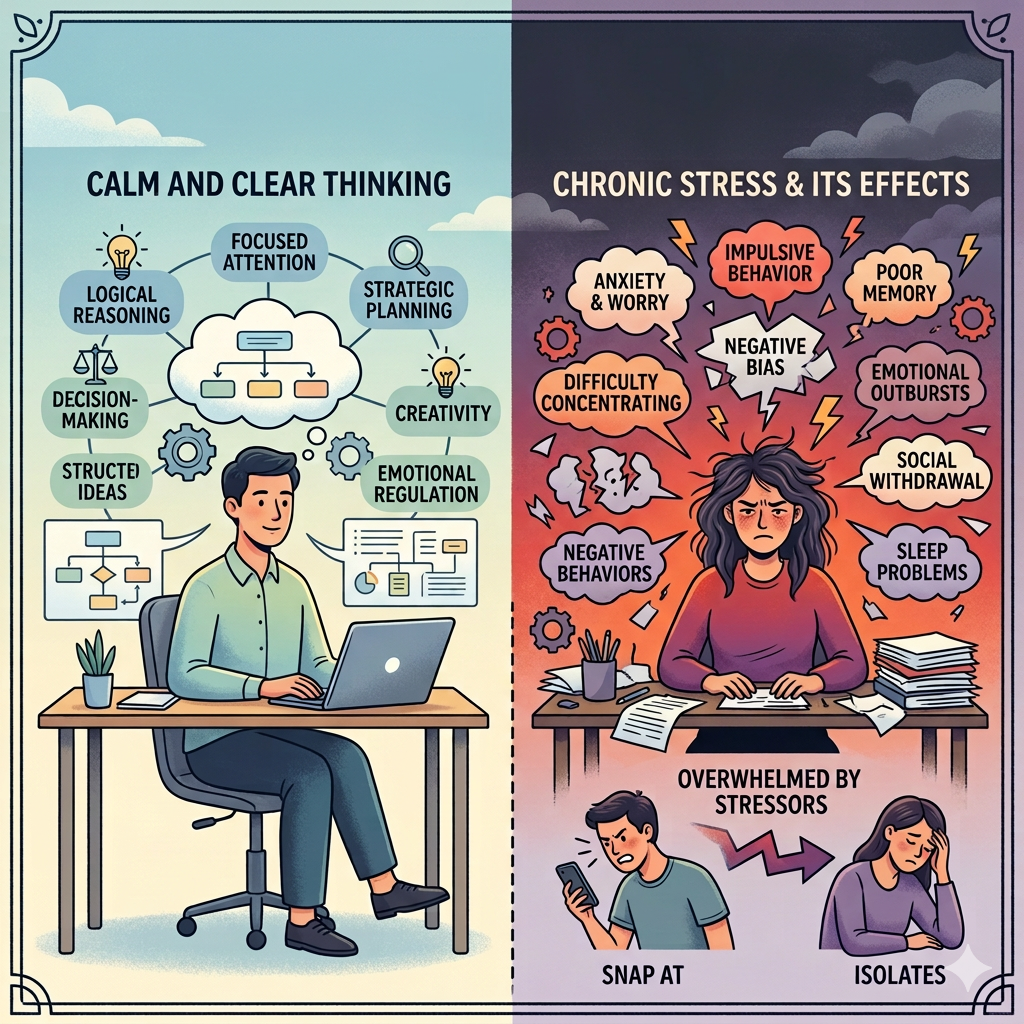
Stress is a common part of human life, influencing how individuals think, feel, and behave. While short periods of stress can sometimes improve focus and performance, prolonged or intense stress often alters cognitive processes and decision-making patterns. Understanding how stress changes the way people think and act provides insight into why individuals may behave differently under pressure and why their judgment, emotions, and actions can shift during challenging situations.
At a biological level, stress activates the body’s stress response system, which prepares individuals to respond to potential threats. When the brain perceives danger or pressure, it triggers the release of stress hormones such as cortisol and adrenaline. These chemicals increase heart rate, sharpen attention, and prepare the body for immediate action. This response is commonly known as the fight-or-flight response, an evolutionary mechanism designed to help humans survive sudden danger.
Although this response can be useful in emergencies, it can also affect cognitive functioning. Under stress, the brain tends to prioritize rapid decision-making over careful analysis. Instead of examining every detail of a situation, individuals may rely on quick judgments or instinctive reactions. This shift occurs because the brain allocates more resources to systems responsible for immediate survival rather than long-term reasoning.
Stress also influences attention and focus. When people experience pressure, their attention often narrows toward the most immediate concern. This phenomenon is sometimes called “tunnel vision.” While focusing intensely on one issue may help solve urgent problems, it can also cause individuals to overlook important information or alternative solutions. As a result, decision-making may become less balanced.
Another cognitive effect of stress involves memory performance. Moderate levels of stress can sometimes enhance memory formation, especially for emotionally significant events. However, high levels of stress often disrupt working memory, which is responsible for temporarily holding and processing information. When working memory becomes overloaded, individuals may struggle to concentrate, remember details, or organize complex thoughts.
Emotional responses also change significantly under stress. Stress increases activity in brain regions associated with emotional reactions, which can lead to stronger feelings such as anxiety, frustration, or irritability. These emotional shifts can influence how individuals interpret events and interact with others. Situations that might normally feel manageable may appear more threatening when stress levels are high.
Behavioral patterns can also change in response to stress. Some individuals may become more cautious and avoid risk, while others may take impulsive actions in an attempt to resolve the pressure quickly. These different responses reflect variations in personality, coping strategies, and past experiences.
Stress can also influence problem-solving strategies. When individuals feel overwhelmed, they may rely more heavily on familiar habits or previously used solutions. While this approach can sometimes be efficient, it may limit creativity and reduce the willingness to explore new ideas. As a result, stress can narrow the range of options that individuals consider when making decisions.
Another important effect involves social behavior. Stress can alter how people communicate and interact with others. Some individuals withdraw from social interaction when they feel overwhelmed, while others may seek reassurance and support. In workplace environments, stress can sometimes lead to misunderstandings, reduced patience, or conflicts among team members.
Long-term stress can have additional cognitive consequences. Chronic exposure to high stress levels may affect brain regions responsible for memory and emotional regulation. Over time, individuals may experience increased difficulty concentrating, maintaining motivation, or managing emotional responses.
Despite these challenges, stress is not always harmful. In certain situations, moderate levels of stress can enhance alertness and encourage individuals to perform at their best. For example, preparing for an important presentation or meeting a challenging deadline can stimulate motivation and focus. This beneficial form of stress is sometimes referred to as productive stress, because it pushes individuals to improve performance without overwhelming them.
The key difference between helpful and harmful stress often lies in duration and intensity. Short bursts of manageable pressure may energize individuals, while prolonged stress without recovery can lead to mental exhaustion and reduced effectiveness.
Understanding how stress affects thinking also highlights the importance of coping strategies. Effective stress management techniques help restore balance in cognitive and emotional systems. Activities such as physical exercise, adequate rest, and structured planning can reduce the intensity of stress responses.
Another valuable approach involves developing awareness of stress triggers. When individuals recognize situations that consistently create pressure, they can prepare strategies to manage those challenges more effectively. This preparation helps prevent stress from escalating into overwhelming levels.
Social support also plays an important role in managing stress. Conversations with supportive colleagues, friends, or family members can help individuals process difficult experiences and gain perspective. Sharing concerns often reduces the emotional burden associated with stressful situations.
Mindfulness and reflective thinking can also improve responses to stress. By pausing and observing thoughts and emotions without immediate reaction, individuals can create space between the stress stimulus and their response. This pause allows more thoughtful decision-making rather than automatic reactions.
In professional environments, organizations can also influence how employees experience stress. Clear communication, realistic expectations, and supportive leadership can reduce unnecessary pressure and help individuals perform effectively. When employees feel supported, they are better able to manage challenges without becoming overwhelmed.
Ultimately, stress changes the way people think and act because it activates biological systems designed to respond quickly to perceived threats. These systems prioritize speed and survival, which can alter attention, memory, emotions, and behavior. While this response can be helpful in certain situations, excessive or prolonged stress may limit analytical thinking and reduce overall effectiveness.
Recognizing the cognitive effects of stress allows individuals and organizations to approach pressure more thoughtfully. By developing strategies to manage stress and maintain balance, people can protect their ability to think clearly, make better decisions, and respond to challenges with greater resilience.