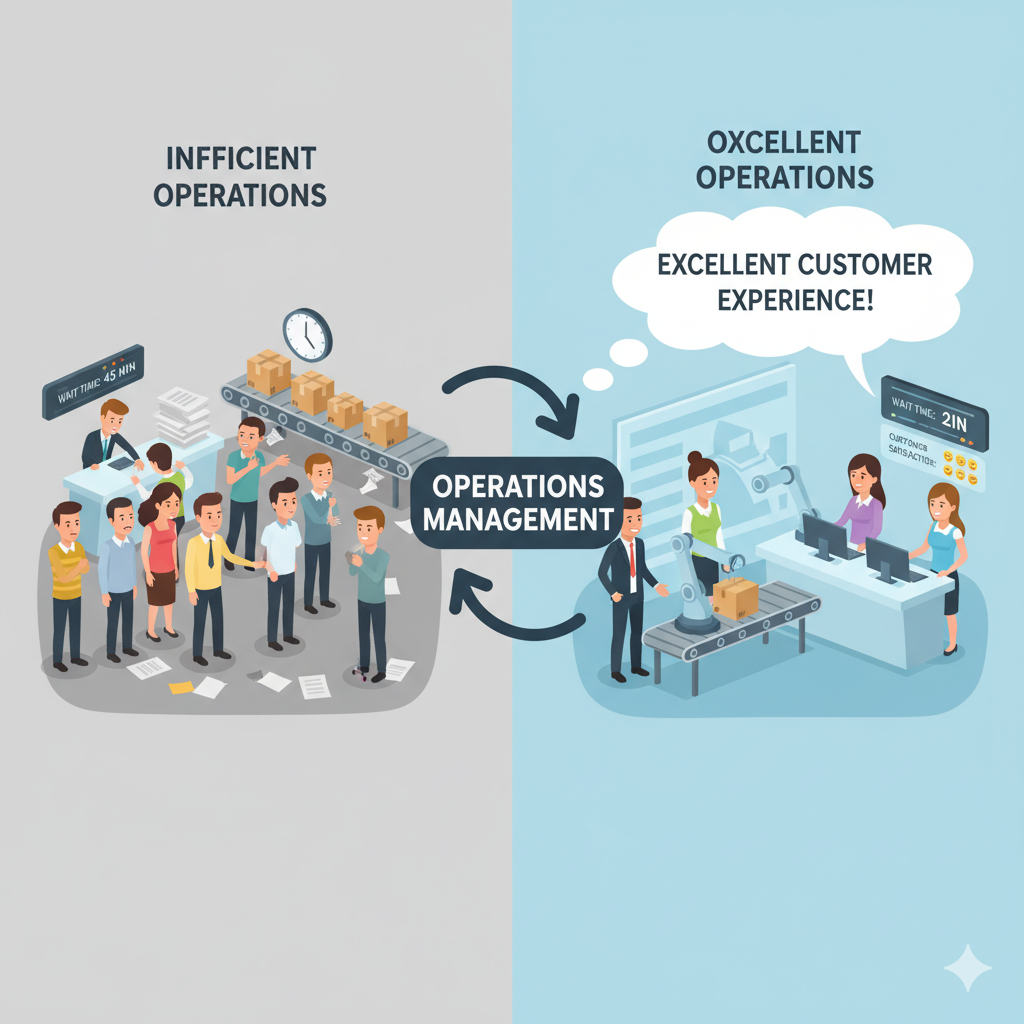
In many organizations, customer experience is often discussed in terms of branding, advertising, and communication strategy, yet the most decisive factor influencing customer satisfaction frequently operates behind the scenes. Operations management the discipline responsible for designing, managing, and improving business processes directly shapes how customers perceive a company. From product availability and delivery timelines to service quality and issue resolution speed, operational decisions determine whether expectations are met, exceeded, or disappointed. While marketing may promise excellence, it is operations that delivers it. When operational systems are efficient, consistent, and customer-focused, they create seamless experiences; when they fail, even the most compelling promotional campaigns cannot repair the damage.
At its core, operations management governs the transformation of inputs into outputs. It involves planning, organizing, and supervising processes that produce goods or deliver services. These processes define the reliability, speed, and consistency customers experience. For example, a brand that advertises next-day delivery relies heavily on its supply chain management, warehouse coordination, and logistics accuracy. If inventory data is inaccurate or transportation scheduling is flawed, delays occur. Customers do not see internal bottlenecks; they only experience unmet expectations. Therefore, operational precision becomes the foundation of positive customer perception.
One of the most significant operational factors affecting customer experience is process efficiency. Efficient workflows reduce waiting times, minimize errors, and ensure predictable outcomes. Whether in retail, hospitality, healthcare, or technology services, customers value speed and reliability. Long queues, delayed responses, or repeated service errors erode trust. By implementing lean methodologies and eliminating waste, companies improve response times and reduce friction points. When customers encounter smooth, hassle-free interactions, their satisfaction increases, reinforcing loyalty and repeat business.
Another crucial dimension is quality management. Consistent product or service quality builds confidence and brand credibility. Operations management integrates quality control systems such as standardized procedures, inspections, and performance metrics to maintain high standards. If operational controls are weak, variations in output emerge, leading to inconsistent customer experiences. For instance, a restaurant chain must ensure standardized recipes, cooking times, and ingredient sourcing across all locations. Without strong operational oversight, quality fluctuates, damaging the brand’s reputation. Effective quality management ensures that every customer receives the same dependable experience.
Inventory management also plays a decisive role in shaping customer perceptions. Stockouts frustrate customers and drive them toward competitors. Overstocking, on the other hand, increases holding costs and may result in outdated products. Operations management uses demand forecasting and inventory optimization techniques to maintain the right balance. Accurate forecasting ensures product availability during peak demand while avoiding unnecessary waste. When customers consistently find what they need, trust deepens, and brand loyalty strengthens.
The role of technology integration in operations has become increasingly important in enhancing customer experience. Automation, data analytics, and real-time tracking systems enable organizations to streamline processes and provide transparency. Customers today expect visibility into order status, delivery timelines, and service updates. Operational systems that integrate digital tools allow businesses to meet these expectations effectively. Real-time tracking and automated notifications reduce uncertainty and enhance convenience. When technology aligns with operational processes, it improves both efficiency and customer satisfaction simultaneously.
Capacity planning is another operational element that significantly affects customer experience. During peak seasons or promotional campaigns, demand surges can overwhelm unprepared systems. Poor capacity management results in delays, reduced service quality, and employee burnout. By forecasting demand accurately and allocating resources strategically, operations managers ensure service consistency even under pressure. Adequate staffing, equipment readiness, and scalable systems prevent disruptions that customers would otherwise experience as inconvenience or frustration.
Employee performance, guided by operational systems, also impacts customer interactions. Standard operating procedures, training programs, and workflow clarity equip employees to deliver consistent service. When operational guidelines are unclear, staff members may provide uneven service experiences. Conversely, well-designed operational structures empower employees to resolve issues efficiently and confidently. This directly influences customer perceptions of professionalism and reliability. Operational management, therefore, indirectly shapes the human element of service delivery.
In service industries, service design and workflow sequencing are central to customer satisfaction. Consider a banking branch or hospital where customer flow must be carefully organized to avoid confusion. Operations management maps customer journeys, identifies bottlenecks, and restructures processes to enhance convenience. By analyzing touchpoints, businesses reduce waiting times and streamline service steps. A well-orchestrated service environment communicates competence and respect for the customer’s time.
Operational resilience is equally vital in maintaining positive experiences. Unexpected disruptions such as supplier delays, technical failures, or sudden demand spikes can negatively affect service delivery. Organizations with strong risk management frameworks within their operations are better equipped to maintain continuity. Contingency planning, diversified suppliers, and backup systems ensure minimal disruption. Customers value reliability, especially during challenging situations. Companies that maintain operational stability during crises strengthen their reputation for dependability.
Cost control within operations also influences customer experience. While excessive cost-cutting can degrade service quality, efficient cost management allows companies to offer competitive pricing without compromising value. Through process optimization and waste reduction, operations management balances affordability and quality. This balance enhances perceived value, an essential component of customer satisfaction. Customers evaluate experiences not only by service quality but also by whether the price reflects the value delivered.
Moreover, continuous improvement practices within operations contribute to evolving customer expectations. Markets change rapidly, and customer preferences shift accordingly. Operations management incorporates feedback loops, performance measurement, and incremental improvements to adapt processes. By analyzing customer feedback and operational data, businesses refine workflows and eliminate recurring issues. Continuous improvement ensures that customer experience does not stagnate but evolves alongside market demands.
Sustainability practices embedded in operations are increasingly influencing customer perception. Environmentally conscious customers evaluate brands based on ethical sourcing, waste management, and responsible logistics. Operations management that integrates sustainable practices enhances brand image and builds trust. Efficient resource utilization not only reduces costs but also strengthens corporate responsibility, contributing positively to the overall customer experience.
Collaboration between marketing and operations further amplifies customer satisfaction. Marketing campaigns generate demand and set expectations, while operations ensure those promises are fulfilled. Misalignment between these functions leads to overpromising and underdelivering. When operations teams are involved in campaign planning, realistic timelines and service capabilities are communicated clearly. This synchronization ensures that promotional messaging aligns with operational capacity, resulting in consistent and trustworthy customer experiences.
Data-driven decision-making has transformed modern operations management. By leveraging analytics, companies gain insights into process performance, customer behavior, and operational efficiency. Data enables predictive adjustments rather than reactive corrections. For instance, predictive maintenance prevents equipment breakdowns that could disrupt service delivery. Predictive demand forecasting ensures product availability before shortages occur. These proactive strategies significantly enhance reliability and customer confidence.
The emotional dimension of customer experience is also influenced by operations. Frustrations caused by delays, errors, or inefficiencies create negative emotional responses that overshadow positive marketing messages. Conversely, smooth and reliable service interactions create comfort and trust. Operations management, though often invisible to customers, determines these emotional outcomes. Efficient processes reduce stress and build confidence, contributing to a favourable overall perception of the brand.
Ultimately, operations management is not merely a backend function but a strategic driver of customer experience. Every operational decision—from supply chain coordination to service workflow design translates into tangible customer outcomes. Businesses that invest in operational excellence create experiences defined by reliability, quality, and efficiency. Those that neglect operations risk undermining even the strongest brand strategies.
In conclusion, the impact of operations management on customer experience is profound and multifaceted. Through effective process design, quality control, inventory optimization, capacity planning, technology integration, and continuous improvement, operations shape every customer interaction. When operational systems are aligned with customer expectations, they create seamless and satisfying experiences that foster loyalty and long-term growth. Marketing may attract customers, but operations determine whether they stay. By recognizing and strengthening this connection, businesses can transform operational efficiency into a powerful competitive advantage that consistently elevates customer experience.